


 English
 русский
 Español
 Français
 عربى
عربى 简体中文
简体中文
Why Are Rattan Chair Injection Moulds Popular?
2026-02-20
Synthetic rattan furniture has grown in popularity for outdoor use, and the Rattan Chair Injection Mould is essential in creating these products. These molds enable manufacturers to reproduce the intricate look of natural rattan while taking advantage of the strength, weather resistance, and longevity of plastic materials. By carefully controlling the molding process, the molds ensure that each chair maintains a consistent weave pattern, smooth texture, and stable structure. This precision allows outdoor chairs to be both visually appealing and durable, capable of withstanding regular use and exposure to sunlight and moisture without losing shape or integrity.
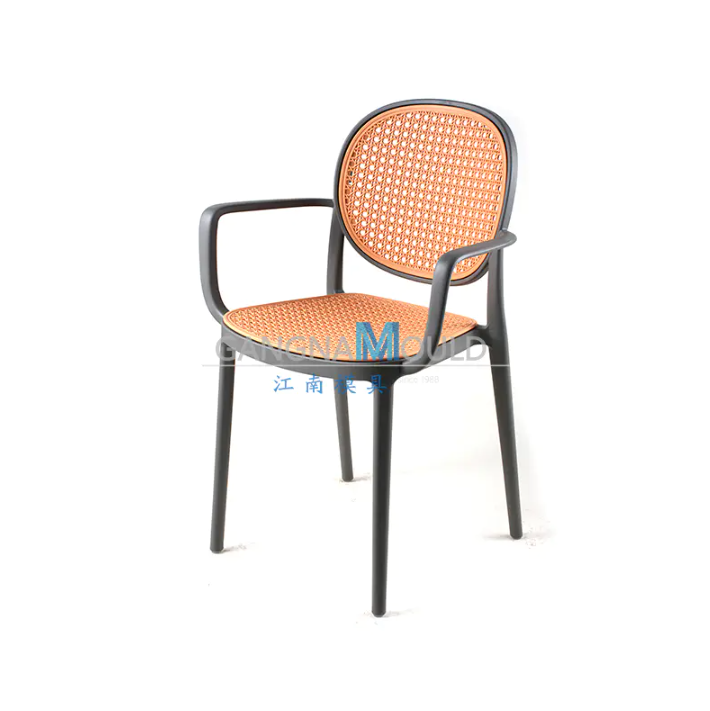
Designing a rattan chair mold is a meticulous and multi-step process that combines precision engineering with aesthetic considerations. The mold must replicate the intricate patterns of natural rattan while maintaining uniform wall thickness to ensure the final product is strong and durable. Engineers first create a digital 3D model of the chair, including the weave details and structural reinforcements, to guide the mold design. CNC (Computer Numerical Control) machining is then used to carve the mold cavities with high accuracy, capturing the fine textures needed to simulate real rattan. After machining, the mold surfaces are carefully polished to remove imperfections and enhance the smoothness and finish of the molded parts. These steps ensure that every chair produced maintains a realistic appearance and consistent quality across multiple units.
Once the mold is prepared, the manufacturing process begins with the injection of polypropylene or other suitable plastics. Proper temperature and pressure settings are critical to ensure that the molten material fills the mold, following the complex weave patterns without creating voids or uneven density. Many rattan chair molds incorporate multiple cavities, allowing several chairs or chair components to be produced in a single cycle, which improves efficiency and reduces production time. After cooling, automated systems often remove the molded pieces and prepare them for assembly, which may include joining the seat, back, and armrest components. Throughout this process, careful control of material flow and cooling ensures structural integrity, dimensional accuracy, and a uniform surface texture that mimics natural rattan.
Rattan chair molds are often designed with assembly in mind, producing separate components that can later be combined into a complete chair. For example, the seat, backrest, and armrests are frequently molded as individual pieces to simplify the production process and allow for greater precision in each part. By separating these components, manufacturers can ensure that each piece meets dimensional and structural requirements without compromising the integrity of the others. This method also makes it easier to incorporate detailed textures, such as realistic rattan weaves, on each component without increasing the complexity of a single large mold.
After molding, the individual components are assembled using methods such as snap-fit connections, screws, or adhesive bonding. Snap-fit mechanisms are particularly advantageous because they allow quick and secure attachment without additional hardware, reducing assembly time and labor costs. Screws or bolts may be used in areas requiring extra strength or adjustability. This modular approach also facilitates maintenance and repairs, as a damaged component can be replaced without discarding the entire chair. Additionally, producing separate components provides flexibility in design variations, enabling manufacturers to offer multiple chair styles or sizes using the same basic molds, which improves efficiency and reduces the need for entirely new molds for each product variant.
The Rattan Chair Injection Mould continues to be essential in producing outdoor furniture that combines aesthetics, comfort, and resilience. These molds enable manufacturers to efficiently create high-quality seating that meets consumer expectations.
Previous Post
Storage Box Injection Mould Supports Organized Living
Next Post
Garden Plastic Furniture Molds Are Changing Outdoor Spaces
Our Products.
Quick Links
Contact Information
- ADD: No. 268, Jinchuan Road, Xinqian Street, Huangyan District, Taizhou City, Zhejiang Province, China
- TEL: +86-(0)576-89191888
- E-MAIL: gm@gangnammould.com
Mobile
Copyright © Zhejiang Huangyan Jiangnan Mould Factory All Rights Reserved.

PP Mould
