


 English
 русский
 Español
 Français
 عربى
عربى 简体中文
简体中文
Does a Pallet Mould Improve Automation and Load Handling?
2026-05-15
Running a warehouse at scale means dealing with problems that quietly eat into margins every single day. Inconsistent pallet sizes slow down automated sorting lines. Damaged wooden pallets hold up shipments. Suppliers who cannot keep up with volume leave operations scrambling. If any of that sounds familiar, the issue often traces back to one overlooked piece of the puzzle: how the pallets themselves are made. A well-engineered Pallet Mould is what sits behind every consistent, durable plastic pallet moving through a modern supply chain, and its design has a more direct effect on logistics performance than most buyers ever stop to consider.
What Is a Pallet Mould and Why Does It Matter in Logistics?
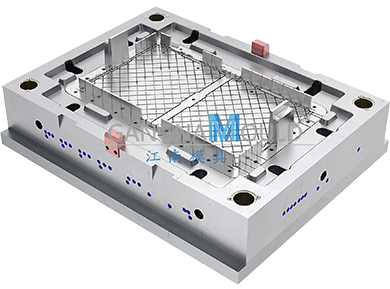
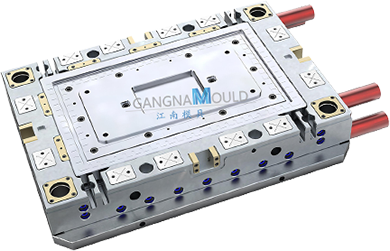
At its core, it is the precision-machined tool used in injection moulding machines to shape molten plastic into finished pallets. Each cycle, hot plastic is injected into the cavity, cooled, and released as a ready-to-use product. The tooling itself determines the pallet's dimensions, surface texture, load-bearing structure, and weight, which means every performance characteristic of the finished pallet starts with the quality of the tool.
For logistics operators, this matters because pallets are not passive carriers. They interact with forklifts, conveyor systems, racking structures, and automated guided vehicles. Any dimensional inconsistency in the pallet creates friction across all of those touchpoints.
How Does This Technology Actually Improve Logistics Efficiency?
The efficiency gains do not come from a single feature. They build up across several layers of the supply chain:
- Dimensional consistency: Every pallet produced from the same tooling shares identical measurements. This removes the guesswork from racking configuration, stacking patterns, and automated system calibration.
- Faster cycle production: Modern tooling uses optimized cooling channels that reduce the time between each injection cycle, which directly translates to higher output per shift without additional equipment.
- Reduced pallet failure rates: A structurally sound tool produces pallets with uniform wall thickness and reinforced load points, cutting down the number of pallets pulled from service due to cracking or deformation.
- Compatibility with warehouse automation: Automated storage and retrieval systems require pallets that meet tight dimensional tolerances. Injection-moulded pallets produced from high-quality tooling meet those tolerances consistently in a way that handmade or poorly-tooled alternatives cannot.
- Lower long-term cost per unit: Durable tooling that holds its cavity geometry through hundreds of thousands of production cycles means less downtime for maintenance and fewer rejected parts eating into the production run.
Plastic vs. Wooden Pallets: Where the Real Difference Lives
The debate between plastic and wooden pallets comes up in almost every procurement conversation, and the answer is rarely as simple as a straight cost comparison. Wooden pallets are cheaper at the point of purchase, but they introduce risks that compound over time.
| Factor | Wooden Pallet | Injection-Moulded Plastic Pallet |
|---|---|---|
| Dimensional consistency | Variable, affected by moisture | Uniform across every unit |
| Compatibility with automation | Requires manual adjustment | Designed to fixed tolerances |
| Lifespan in heavy use | Short, prone to splintering | Long, structurally stable |
| Hygiene suitability | Absorbs moisture, harbors bacteria | Non-porous, easy to sanitize |
| Weight impact on freight cost | Heavier per load | Lighter, reduces freight load |
| Recyclability | Limited, often landfilled | Fully recyclable material |
The plastic option starts making clear economic sense once the full picture comes into view, particularly in operations where pallets cycle frequently or pass through food-grade, pharmaceutical, or export environments with strict hygiene requirements.
Key Design Factors That Affect Logistics Performance
Not all tooling is built with logistics performance in mind. There are a handful of design decisions that separate tools built for industrial-grade throughput from those that simply produce something pallet-shaped.
Structural Rib Layout
The internal rib pattern determines how load is distributed across the pallet deck. A well-calculated rib structure supports dynamic loads during forklift movement without flexing, which prevents cargo shift and reduces the chance of in-transit damage.
Surface Texture and Grip Design
Surface detailing is not cosmetic. Anti-slip patterns on the deck keep cargo secure during transport, while the entry points for forklift tines need clean, consistent geometry to prevent catching or jamming during fast-paced loading operations.
Cooling System Within the Tool
Efficient cooling channels built into the tooling reduce the time each cycle takes while also ensuring even material shrinkage. Uneven cooling leads to warping, which is one of the common causes of pallets that fail dimensional checks after production.
Steel Grade and Tooling Longevity
The steel used in the mould cavity determines how many production cycles the tool can sustain before it begins to lose dimensional accuracy. Industrial-grade tooling is expected to deliver consistent parts across a very high number of cycles, and the steel selection at the design stage is what makes that possible.
Common Mistakes Buyers Make When Sourcing Pallet Moulds
Procurement decisions around tooling are often driven by price, and that is where many operations run into problems down the line. A few patterns show up repeatedly:
- Choosing the lowest quoted price without evaluating steel grade or cooling design.
- Not specifying automation compatibility requirements upfront, leading to pallets that cause jams or misreads in storage and retrieval systems.
- Overlooking the connection between tooling lifespan and per-unit cost across a full production run.
- Ignoring surface detail requirements for the specific handling equipment in use at the warehouse.
- Treating single-cavity and multi-cavity tooling as interchangeable when volume demands are actually quite different.
Getting these decisions right before tooling is commissioned saves significant cost later. Changes after production begins are expensive and time-consuming.
How to Match Mould Specifications to Your Operation
Selecting the right tooling comes down to mapping the operational environment against the design parameters. A few practical considerations:
- Load requirements: Know the dynamic and static load ratings your operation demands. This drives the rib layout and wall thickness decisions.
- Pallet dimensions: Match the finished pallet size to the racking and conveyor standards already in place. Retrofitting systems to accommodate non-standard pallets is far more expensive than specifying the right size from the start.
- Production volume: Higher volume operations benefit from multi-cavity tooling, which produces more than one pallet per injection cycle. Smaller runs may not justify the added tooling cost.
- Industry-specific requirements: Food and pharmaceutical environments often require specific surface finishes, drain patterns, and material certifications that need to be built into the design.
- Runner system: The choice between hot runner and cold runner systems affects material waste, cycle speed, and the finished surface quality of the pallet.
The Role of Tooling Quality in Warehouse Automation
Automated warehouses place demands on pallets that manual environments simply do not. AGV systems, robotic picking, and automated racking all rely on the pallet being exactly where the system expects it to be, with exactly the geometry it expects to find. Even small deviations cause sensor misreads, positioning errors, and system stoppages that add up to real downtime.
This is where the quality of the original tooling becomes a supply chain variable rather than just a manufacturing detail. A tool that holds its cavity geometry over time produces pallets that remain compatible with the automation system across the full production run, not just in the early batches.
Why Tooling Precision Matters More Than the Pallet Price Tag
It is tempting to think of the mould as a one-time tooling cost and the pallet as the real product. In practice, the tooling is what determines whether every pallet in every batch performs the same way. Inconsistency at this stage shows up as inconsistency across the entire operation, in the form of handling errors, automation failures, and accelerated pallet wear.
Investing in well-engineered tooling is effectively an investment in the reliability of the supply chain itself. The pallets are just the visible result.
Frequently Asked Questions
What Is a Pallet Mould Used For?
It is used in injection moulding machines to produce plastic pallets in large volumes. The tooling shapes each pallet to a fixed geometry, ensuring every unit is structurally consistent and dimensionally identical.
How Does It Improve Logistics Efficiency?
By producing pallets with uniform dimensions and structural integrity, it removes variables that slow down automated systems, increase handling errors, and cause premature pallet failure in high-throughput environments.
What Materials Are Used in Pallet Mould Manufacturing?
The tool itself is typically machined from industrial-grade steel. The pallets it produces are most commonly made from high-density polyethylene or polypropylene, chosen for strength, weight, and recyclability.
What Is the Difference Between Plastic Pallet Output and Wooden Pallets?
Plastic pallets produced through injection moulding are dimensionally consistent, non-porous, and far more compatible with automated handling systems. Wooden pallets vary in size and absorb moisture, which affects their performance and longevity in demanding logistics environments.
Why Is Injection Moulding Preferred for Pallets?
It allows high-volume production of complex shapes with precise dimensions and repeatable quality, which is difficult to achieve with alternative manufacturing methods at scale.
How Long Does Tooling Last in Production?
The lifespan depends heavily on the steel grade used and the maintenance schedule applied. Well-built industrial tooling can sustain production across a very high number of cycles before requiring significant repair or replacement.
What Industries Use Plastic Pallets the Most?
Food and beverage, pharmaceutical, cold storage, e-commerce fulfillment, and export packaging are among the sectors with the highest adoption, largely because of hygiene requirements and the need for dimensional precision in automated facilities.
Can Tooling Be Customized for Different Pallet Sizes?
Yes. The design is tailored to the required pallet dimensions, load ratings, surface features, and entry configurations based on the specific application and handling equipment involved.
What Affects the Quality of a Pallet Mould?
Steel selection, machining precision, cooling channel design, and the engineering behind the structural rib layout all contribute to whether the tooling performs reliably over its intended production life.
How Does Tooling Design Impact Pallet Strength and Durability?
The internal geometry of the tool determines wall thickness distribution and rib placement, which directly controls how load is carried across the pallet and how well it holds up under repeated dynamic and static stress.
Bringing It Together
Logistics efficiency is built on a chain of small decisions, and tooling quality is one that rarely gets the attention it deserves. When the manufacturing foundation is solid, the pallets it produces perform reliably across thousands of handling cycles, stay compatible with automated systems, and require far less replacement than cheaper alternatives. Zhejiang Huangyan Jiangnan Mould Factory brings deep engineering experience to industrial pallet tooling, working with logistics operators, warehouse integrators, and plastic manufacturers to develop solutions that fit the real demands of high-volume supply chain environments. If your operation is ready to move away from inconsistent pallet performance, reaching out to discuss your production requirements is a practical next step.
Previous Post
Why Is Vegetables Basket Crate Mold Design Important for Ventilated Crates?
Next Post
How to Select a Pallet Mould for Food Logistics?
Our Products.
Quick Links
Contact Information
- ADD: No. 268, Jinchuan Road, Xinqian Street, Huangyan District, Taizhou City, Zhejiang Province, China
- TEL: +86-(0)576-89191888
- E-MAIL: gm@gangnammould.com
Mobile
Copyright © Zhejiang Huangyan Jiangnan Mould Factory All Rights Reserved.

PP Mould
