


 English
 русский
 Español
 Français
 عربى
عربى 简体中文
简体中文
How to Choose a Pallet Mould for Warehouse Production
2026-05-01
Sourcing a mould for plastic pallet production is not a straightforward purchase. The technical requirements are demanding, the cost is significant, and a poorly specified mould creates problems that compound over thousands of cycles. If you are setting up or expanding a plastic pallet production line for warehousing and logistics applications, the mould decision sits at the center of everything — it shapes pallet quality, production cycle time, output consistency, and long-term unit economics. A well-designed Pallet Mould is not just tooling; it is the foundation of a production system that either runs reliably at scale or turns into a recurring maintenance headache from the start.
What a Plastic Pallet Mould Actually Does in a Warehousing Context
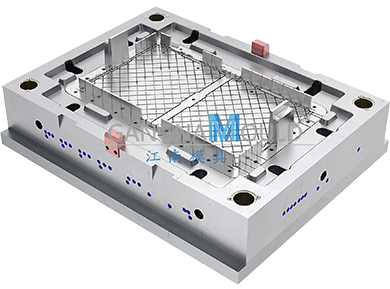
A plastic Pallet Mould is a precision injection tooling used to produce plastic pallets at industrial volume. Every physical characteristic of the finished pallet traces back to the mould: its dimensions, load-bearing structure, surface texture, forklift entry geometry, and rigidity.
In warehousing systems, standardization is not optional. Pallets need to:
- Match the footprint requirements of racking systems and automated handling equipment
- Carry specified loads without deforming under dynamic and static conditions
- Stack consistently to use vertical storage space efficiently
- Interface reliably with forklifts, conveyors, and pallet jacks
When the mould is imprecise, everything downstream suffers — misaligned loads, racking incompatibility, reduced lifespan, inconsistent stacking. The mould is the upstream variable that controls all of it.
How Injection Moulding Actually Produces Pallets
Understanding the production process clarifies what mould quality affects in practice. The injection moulding sequence for plastic pallets goes like this:
- Raw material — typically HDPE or PP in pellet form — feeds into the barrel of a large injection moulding machine
- The material heats to a molten state and is injected under high pressure into the mould cavity
- Molten plastic fills the cavity, taking the shape defined by the mould geometry
- The cooling system removes heat from the part, solidifying the plastic
- The mould opens and the finished pallet is ejected
- The cycle repeats
Cycle time, material distribution, dimensional accuracy, and surface quality all trace back to how well the mould was designed and built. Poor cooling channels warp pallets. Inadequate gate design produces incomplete filling or visible surface defects. The machine settings can compensate for small issues, but they cannot fix a structural problem in the mould itself.
Why Warehousing Operations Are Sensitive to Pallet Consistency
The pallet is a functional unit inside a system, not a standalone product. In modern warehousing environments, it interacts with:
- Automated storage and retrieval systems that require tight dimensional tolerances
- Racking structures designed around specific pallet footprints and load ratings
- Conveyor and sorting systems where pallet geometry affects tracking accuracy
- Cold chain environments where material behavior under temperature swings matters
A pallet that warps slightly, carries inconsistent dimensions, or deforms under load creates friction across the entire logistics operation. That inconsistency almost always starts upstream — in the mould quality or the production process it supports.
Which Mould Types Are Used in Pallet Manufacturing?
Different warehousing applications call for different pallet designs, and each design requires a specific mould configuration.
| Pallet Type | Mould Configuration | Typical Application |
|---|---|---|
| Single-face pallet | Single-face cavity with leg or block structure | Light-duty storage, export packaging |
| Double-face pallet | Full top and bottom deck geometry | Heavy industrial racking, long-term use |
| Stackable pallet | Nested leg design for vertical stacking | High-density storage facilities |
| Racking system pallet | Reinforced beam entry geometry | Selective and drive-in racking |
| Heavy-duty industrial pallet | Reinforced rib structure, large cavity | Manufacturing supply chains, automotive |
Each configuration involves different structural engineering, cooling layouts, and machine tonnage requirements. Choosing the wrong type for the application creates performance problems that no process adjustment will fully resolve.
Technical Factors That Separate a Good Mould from a Problematic One
Steel Selection
The steel used for the mould core and cavity determines how long it lasts under production conditions. Harder steels resist wear better but require more precise machining. The right choice depends on planned production volume and the abrasiveness of the material being run. Using softer steel in a high-volume application is one of the most common causes of premature mould wear.
Cooling System Design
Cooling is where large Pallet Moulds earn or lose their reliability. Because pallets have a large surface area relative to their wall thickness, uniform heat extraction across the full part is genuinely difficult. Uneven cooling causes warping — and warping is the single most common quality problem in pallet production. Effective cooling design means balanced channel layout, adequate flow rate, and conformal cooling in areas where straight channels cannot reach.
Gate and Runner Design
The gate system controls how molten plastic enters the cavity. Gate placement and runner balance determine whether the cavity fills completely and evenly before the material starts to cool. Hot runner systems reduce material waste and improve cycle time but add mould complexity and cost. Cold runner systems are simpler but generate more waste per cycle — relevant when calculating material cost per pallet at volume.
How to Select the Right Mould for Your Production Requirements
The selection process should be driven by production requirements, not price.
- Production volume: A mould for lower volumes uses different steel specifications and tolerances than one built for millions of cycles. Getting this wrong means either unnecessary cost or early wear.
- Machine compatibility: Large pallets require significant injection machine tonnage. Confirm the clamping force, shot size, and platen dimensions of the machines the mould will run on before specifying anything.
- Pallet size standards: Warehousing markets in different regions use different dimension standards. The mould must produce pallets that conform to the standards used in the target market — close is not the same as compatible when it comes to racking systems.
- Post-production requirements: If pallets will need secondary operations — printing, labeling, additional assembly — the mould design should account for consistent surface finish and dimensional stability that supports those processes.
What Customization Options Are Available?
Standard mould configurations cover many common pallet specifications, but warehousing applications often need something specific. Common customization areas include:
- Logo and identification markings engraved directly into the mould cavity for permanent surface branding
- Anti-slip surface textures that increase friction between stacked loads and the pallet
- Structural reinforcement in high-stress zones for applications with elevated load requirements
- Weight optimization through material reduction in non-structural areas — without affecting load capacity
- Cold storage adaptation, where standard geometry may not hold up under sustained low temperatures
Customization adds lead time and upfront cost. But it eliminates the performance compromises that come from forcing a non-standard application into a standard mould.
Common Production Problems and What They Actually Point To
Pallet Warping
Warping happens when different sections of the pallet cool at different rates. The fix is always in the cooling system — specifically, balanced heat extraction across the mould surface. Adjusting process parameters handles the symptom temporarily; it does not fix the root cause.
Incomplete Filling
Short shots — where the cavity does not fill completely — come from inadequate gate size, insufficient injection pressure, or material that has cooled too much before reaching distant sections. Gate design and runner balance are the engineering levers that prevent this.
Surface Defects and Weld Lines
Weld lines form where two flow fronts meet inside the cavity. They are areas of reduced strength and can be visible on the finished surface. Gate placement controls where weld lines form — the goal is to keep them out of high-stress areas. Once the mould is built, weld line location is largely fixed.
Premature Mould Wear
Some wear is normal over a mould's service life. Accelerated wear at the gate, ejector pins, or parting line points to a design or material specification problem. The right steel for the production volume, combined with correct process parameters, makes a significant difference in how long the mould stays in good condition.
What to Look for When Evaluating a Mould Supplier
For a large-format industrial mould, engineering capability matters as much as cost. Key things to check:
- In-house design and simulation capability: Suppliers who run mould flow analysis before machining identify filling and cooling problems at the design stage — not during trial, and not after delivery.
- CNC machining equipment scale: Large Pallet Moulds require large machining centers. Confirm the supplier's equipment can handle the mould dimensions.
- Trial injection capability: The ability to run trial shots and make adjustments before shipment is essential. For large-format moulds, commissioning problems are expensive to resolve at the production facility.
- Export and documentation experience: For buyers importing moulds, familiarity with export documentation and international shipping requirements reduces friction at the logistics stage.
- After-sales support: Understand what is available for mould repair, spare parts, and technical consultation after delivery — before agreeing to purchase.
Working with a Mould Manufacturer: What the Process Looks Like
A productive supplier relationship starts with clear technical communication from the outset. The process typically runs:
- Requirement definition: Share pallet specifications, target weight, load rating, dimensional standards, and production volume expectations
- Design review: The supplier produces 3D mould designs for review — confirm cavity geometry, gate placement, and cooling layout at this stage
- Material and steel confirmation: Agree on steel grade and any special treatment requirements based on production volume and material
- Machining and assembly: The mould is machined, assembled, and prepared for trial
- Trial injection: Sample pallets are produced and assessed against dimensional and quality specifications
- Adjustment and sign-off: Required modifications are made and a final trial confirms performance
- Shipment and commissioning: The mould ships with documentation, and the supplier provides commissioning support as agreed
Cutting the trial and adjustment stage to save time is a common source of commissioning problems. A mould that has not been properly trialled at the supplier's facility creates delays that are harder and more disruptive to manage once the mould arrives at your production site.
Material Choice and Its Effect on Mould Design
HDPE and PP behave differently in the mould, and the choice affects how the mould needs to be specified.
- HDPE has lower stiffness but better impact resistance, especially at low temperatures. It shrinks more during cooling, which affects the dimensional allowances built into the cavity.
- PP offers higher stiffness and suits applications where rigidity under load is a priority. Its flow behavior in the mould differs from HDPE, which affects gate sizing and injection parameters.
- Recycled materials introduce variability in flow and shrinkage. Moulds intended to run recycled content should be designed with wider process windows to accommodate that variability without producing out-of-spec parts.
The thermal shrinkage rate of the material determines how cavity dimensions must be adjusted to produce a pallet that meets its nominal dimensions after cooling. This calculation is built into the mould design — not something that can be corrected by adjusting machine settings after the fact.
The Long-Term Economics of Investing in a Well-Engineered Mould
A Pallet Mould spreads its cost across every pallet produced over its service life. The economics favor quality engineering at the outset because a well-designed mould produces consistent parts across its full life with minimal process adjustment. Shorter cycle times from efficient cooling directly reduce per-unit production cost. Reduced maintenance and longer mould life lower total ownership cost compared to a lower-specification tool that needs earlier replacement.
The cost difference between a well-engineered mould and a cheaper alternative is typically recovered within a fraction of the total service life through these production advantages — not a theoretical calculation, but a pattern that shows up consistently in production environments where both types have been used side by side.
Setting up a plastic pallet production line for warehousing applications is a long-term commitment, and the Pallet Mould at the center of that line determines whether the investment delivers consistent returns or creates ongoing production challenges. Zhejiang Huangyan Jiangnan Mould Factory specializes in industrial injection moulds including plastic Pallet Moulds for warehousing and logistics applications, with engineering capability covering design, simulation, machining, and trial injection. If you are defining specifications for a new pallet production line, evaluating suppliers for a current project, or looking to replace an underperforming mould, reaching out to their technical team is a practical starting point for understanding what is feasible within your production requirements and timeline.
Previous Post
How to Select a Pallet Mould for Food Logistics?
Next Post
Why Choose Pallet Mould Over Wooden Pallets?
Our Products.
Quick Links
Contact Information
- ADD: No. 268, Jinchuan Road, Xinqian Street, Huangyan District, Taizhou City, Zhejiang Province, China
- TEL: +86-(0)576-89191888
- E-MAIL: gm@gangnammould.com
Mobile
Copyright © Zhejiang Huangyan Jiangnan Mould Factory All Rights Reserved.

PP Mould
