


 English
 русский
 Español
 Français
 عربى
عربى 简体中文
简体中文
How to Select a Pallet Mould for Food Logistics?
2026-05-08
Sourcing the right production tooling for plastic pallets is rarely straightforward. Lead times, mould precision, material compatibility, and hygiene compliance all need to align before a single pallet leaves the production line — and when they do not, the consequences show up downstream in damaged goods, failed audits, or logistics systems that simply do not run as planned. For manufacturers and supply chain operators in the food and beverage sector, the quality of the Pallet Mould used to produce handling equipment is not a background variable. It sits at the foundation of every operational decision that follows.
Why Food and Beverage Logistics Places Unusual Demands on Pallets
Hygiene Requirements Go Beyond General Industrial Standards
Food and beverage supply chains operate under regulatory frameworks that other industries do not face. Pallets in these environments come into contact with packaging that directly touches consumable products, which means contamination risk is a live concern at every handling point.
Plastic pallets produced with well-engineered moulds address this in ways that other materials cannot:
- Non-porous surfaces that do not absorb moisture, bacteria, or cleaning chemicals
- No splinters, nails, or rough surfaces that can damage packaging or create contamination points
- Consistent geometry that supports predictable stacking and handling without unexpected failure
Wooden Pallets Create Compliance Friction
Wood absorbs moisture and harbors biological contaminants in ways that are difficult to eliminate through cleaning. In temperature-controlled environments or facilities operating under food safety standards, wooden pallets introduce variables that plastic alternatives remove. The shift toward plastic is driven by operational need rather than preference.
What Is a Pallet Mould and What Does It Actually Do?
The Mould Is the Production Tool, Not the Product
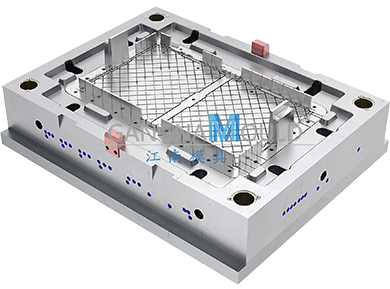
A Pallet Mould is an injection moulding tool — a precision-engineered steel cavity into which molten plastic is injected under pressure to produce a pallet with a defined shape, wall thickness, structural rib pattern, and surface texture. The mould determines every physical characteristic of the pallet that comes out of it.
Understanding this distinction matters for procurement decisions:
- A low-precision mould produces pallets with dimensional inconsistency
- A mould with poor steel quality degrades over production cycles, introducing variation in later units
- A mould designed without input from logistics engineers may produce pallets that fail in automated warehouse environments despite appearing structurally sound
How Mould Quality Connects to Pallet Performance
The relationship is direct. Cavity tolerances in the mould determine whether pallet walls are uniform in thickness. Cooling channel design determines whether the plastic sets evenly, which affects warping. Gate placement determines where material flows during injection, which affects the structural integrity of load-bearing areas.
Buyers evaluating suppliers often focus on pallet specifications without adequately examining the mould engineering behind them. The two are inseparable.
How Plastic Pallets Are Produced Through Injection Moulding
The production sequence for a plastic pallet through injection moulding follows a defined process:
- Resin — typically HDPE or PP — is fed into the injection moulding machine and heated to a molten state
- The molten material is injected under controlled pressure into the closed mould cavity
- The material fills the cavity, including all rib structures, entry points, and surface features
- Cooling channels within the mould remove heat to solidify the plastic in the correct geometry
- The mould opens and the finished pallet is ejected
- The pallet is inspected and conditioned before entering the production inventory
Cycle time, material waste, and dimensional consistency are all functions of mould design and machine calibration. A well-engineered mould running on an appropriately specified machine produces pallets at consistent quality across long production runs.
Material Selection for Food-Grade Pallet Production
HDPE vs PP: Different Properties, Different Applications
Material choice is not interchangeable. Each resin brings a distinct performance profile that makes it more or less suited to specific food and beverage logistics environments.
| Property | HDPE | PP |
|---|---|---|
| Temperature Resistance | Moderate; suits ambient and chilled | Higher; handles wider temperature range |
| Chemical Resistance | Strong; resists cleaning agents | Strong; handles acids and alkalis well |
| Impact Resistance | High; performs well in cold environments | Moderate; can become brittle at low temperatures |
| Weight | Heavier for equivalent wall thickness | Lighter; useful for weight-sensitive applications |
| Food-grade Certification | Available; widely used | Available; used across food contact applications |
| Recyclability | High; recyclable at end of life | High; recoverable material |
Cold chain logistics — dairy, frozen food, seafood — typically favors HDPE for its impact performance at low temperatures. Ambient and beverage applications may work well with PP, particularly where weight reduction across a large fleet of pallets produces meaningful handling and transport savings.
Key Design Requirements for Food and Beverage Pallet Applications
Structural Design Must Reflect Real Handling Conditions
A pallet used in beverage logistics carries different loads and experiences different handling patterns than one used in dry goods warehousing. The mould design needs to reflect the actual application:
- Load-bearing capacity: Rib depth, wall thickness, and material distribution determine how much the pallet can carry in both static racking and dynamic forklift conditions
- Entry configuration: Two-way or four-way forklift entry affects handling speed and equipment compatibility in different warehouse layouts
- Drainage and ventilation: Open-deck designs with drainage channels are standard in wet environments like produce, dairy, and beverages — closed decks suit dry goods where surface cleanliness between uses is easier to maintain
- Anti-slip surface: Raised surface features moulded directly into the deck reduce product movement during transport without requiring additional materials
Nestable vs Stackable Configurations
The choice between nestable and stackable pallet designs affects return logistics economics. Nestable pallets reduce storage volume when empty, which matters for operations returning large numbers of pallets from distribution points. Stackable designs carry more weight but occupy more space when not in use. The mould design for each is different, and retrofitting one configuration from another is not practical — this decision belongs in the specification stage, not after tooling is ordered.
Application Scenarios Across Food and Beverage Logistics
Where Molded Plastic Pallets Are Used in Practice
Plastic pallets produced through precision moulds appear across the full range of food and beverage supply chain functions:
- Beverage bottling and distribution: High-volume, repeated-use environments where dimensional consistency and stackability directly affect line speed and storage density
- Dairy and refrigerated logistics: Cold chain requirements favor impact-resistant materials and non-porous surfaces that clean reliably between use cycles
- Meat and seafood processing: Wash-down environments demand pallets that drain effectively, resist chemical sanitizers, and do not harbor biological material in surface pores or cracks
- Dry goods warehousing and export: Pallets destined for international shipping need to meet phytosanitary standards — plastic pallets are exempt from the heat treatment requirements applied to wood
- Automated warehouse systems: Pallet geometry consistency is a hard requirement for automated guided vehicles and robotic handling systems — this is where mould precision translates directly into system performance
Customization Options Available Through Mould Engineering
Standard Sizes Are Not Always Sufficient
Global logistics operates across multiple pallet footprint standards. A manufacturer supplying into multiple regional markets may require tooling for more than one standard size. Custom mould engineering addresses:
- Non-standard footprint dimensions for specific retail or customer requirements
- Reinforced rib configurations for higher load ratings
- Embedded RFID or identification channels for track-and-trace applications
- Company or brand markings moulded directly into the deck surface
- Multi-cavity tooling for higher production volume per machine cycle
Customization at the mould stage is more cost-effective than attempting to modify production pallets after the fact. Buyers working with a supplier capable of engineering custom tooling have more control over the performance and identity of their pallet product.
What to Look for When Evaluating a Pallet Mould Manufacturer
Technical Capability Matters More Than Price Alone
The supplier evaluation process for industrial mould tooling involves more variables than a standard component purchase. Key considerations include:
- Steel grade and mould longevity: Higher-grade tool steel extends mould service life and maintains dimensional accuracy over longer production runs
- Engineering support at the design stage: Suppliers who engage with load requirements, material selection, and application environment before finalizing tooling designs produce better outcomes than those who work from drawings alone
- Quality control documentation: Dimensional verification records, material certifications, and test reports should be available and reviewable before tooling is accepted
- After-sales support: Mould maintenance, repair, and modification capability matters for buyers running pallets in long-term production
- Lead time and capacity: A supplier who cannot deliver tooling within project timelines or scale production when volume increases creates operational risk regardless of quality
Common Questions About Pallet Mould and Logistics Pallets
What Is a Pallet Mould Used for in Manufacturing?
It is the tooling used in injection moulding to produce plastic pallets with defined dimensions, structural features, and surface characteristics. The mould determines the quality and consistency of every pallet produced from it.
Why Are Plastic Pallets Preferred in Food and Beverage Logistics?
They offer non-porous, cleanable surfaces, consistent geometry, resistance to moisture and chemicals, and exemption from phytosanitary treatment requirements that apply to wood. These properties make them more compatible with food safety standards and automated handling systems.
How Does Injection Moulding Improve Pallet Production Efficiency?
Once tooling is established, injection moulding produces pallets at consistent quality with short cycle times and low per-unit material waste. It supports high-volume production without the dimensional variation common in other fabrication methods.
What Materials Are Commonly Used for Food-Grade Plastic Pallets?
HDPE and PP are the standard choices. Both are available in food-contact grades, both are recyclable, and both offer chemical resistance suitable for wash-down environments. The choice depends on temperature requirements and application-specific performance needs.
Can Pallet Moulds Be Customized for Different Industry Applications?
Yes. Mould engineering can accommodate non-standard sizes, structural reinforcement, drainage configurations, surface features, and identification channel integration. Customization is most cost-effective when addressed at the tooling design stage.
How Long Does a Plastic Pallet Typically Last in Industrial Use?
Service life depends on load conditions, handling environment, and material quality. Pallets produced from well-engineered moulds with appropriate material grades maintain structural integrity across significantly more use cycles than wooden alternatives.
What Makes a Plastic Pallet Suitable for Cold Chain Logistics?
Impact resistance at low temperatures, non-porous surface that tolerates repeated wash-down cycles, and dimensional stability that does not change with temperature variation. HDPE is widely used in cold chain for these reasons.
How Does Pallet Mould Design Affect Strength and Load Capacity?
Rib configuration, wall thickness distribution, and gate placement during injection all influence where and how structural loads are carried. A well-engineered mould distributes material to load-bearing areas effectively rather than simply filling a cavity.
Are Plastic Pallets More Environmentally Responsible Than Wooden Alternatives?
Plastic pallets have a longer service life, produce no splinters or biological waste, and are recyclable at end of life. Wood requires ongoing harvesting and, in international shipping contexts, chemical or heat treatment. The environmental comparison depends on the full lifecycle, but plastic performs well in high-use, repeated-cycle applications.
What Should You Consider When Selecting a Pallet Mould Supplier?
Steel quality, engineering capability, quality documentation, after-sales support, lead time reliability, and the supplier's experience with similar applications. Price is relevant but should be evaluated in the context of tooling longevity and the production volumes it needs to support.
Can a Single Pallet Mould Produce Multiple Configurations?
Multi-cavity moulds can produce more than one pallet per cycle, but producing different configurations from a single mould is not standard practice. Different pallet designs require separate tooling.
How Are Plastic Pallets Cleaned in Food and Beverage Environments?
High-pressure wash-down with food-safe cleaning agents is standard. Non-porous plastic surfaces release contaminants more completely than wood, and the absence of joints or grain structure reduces areas where residue can accumulate.
Selecting the right tooling partner for plastic pallet production in food and beverage logistics is a decision with long-term supply chain implications. The quality, precision, and application-specific design of the tooling determines not just how the pallets perform on day one, but how consistently they perform across thousands of handling cycles in demanding hygiene-controlled environments. Zhejiang Huangyan Jiangnan Mould Factory specializes in Pallet Mould production for logistics and industrial applications, offering engineering support from specification through to production verification and working with manufacturers and supply chain operators on custom tooling requirements. If you are evaluating tooling options for a new pallet production line or reviewing your current supplier's capability, reaching out to their team is a practical starting point for the conversation.
Previous Post
Does a Pallet Mould Improve Automation and Load Handling?
Next Post
How to Choose a Pallet Mould for Warehouse Production
Our Products.
Quick Links
Contact Information
- ADD: No. 268, Jinchuan Road, Xinqian Street, Huangyan District, Taizhou City, Zhejiang Province, China
- TEL: +86-(0)576-89191888
- E-MAIL: gm@gangnammould.com
Mobile
Copyright © Zhejiang Huangyan Jiangnan Mould Factory All Rights Reserved.

PP Mould
