


 English
 русский
 Español
 Français
 عربى
عربى 简体中文
简体中文
Crate Box Mould Design and Manufacturing
2025-12-05
In the field of plastic manufacturing, Crate Box Mould design plays a central role in ensuring that production processes run smoothly and produce components with reliable consistency. A well-designed mould allows manufacturers to achieve precise dimensions for each crate, which is crucial for applications in logistics, retail, food storage, and medical packaging. To meet these requirements, many producers are incorporating a range of design improvements, including optimised cavity layouts, controlled hot runner systems, and enhanced cooling channels.
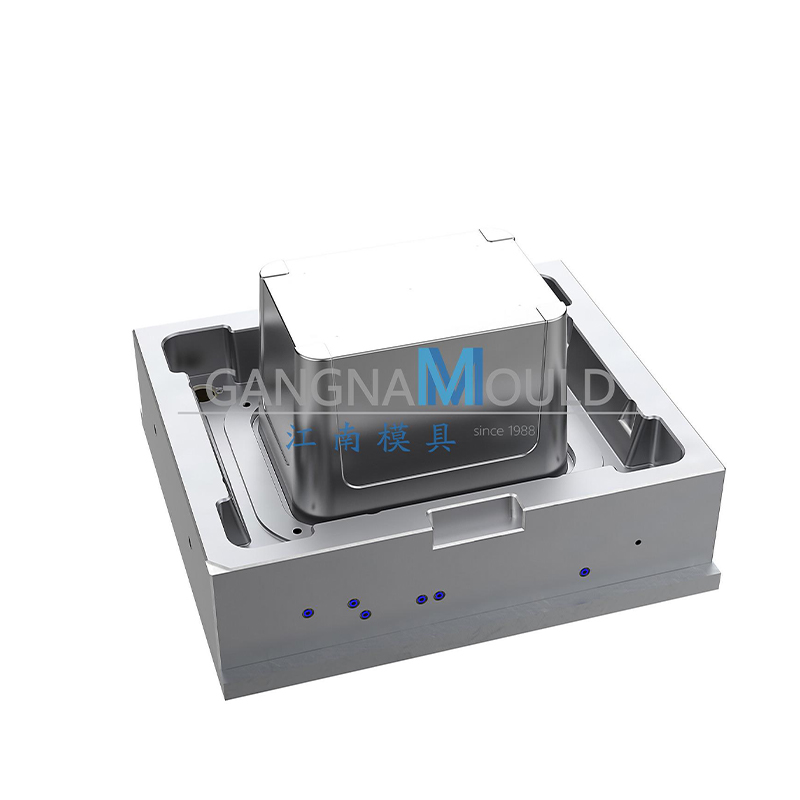
Additionally, the use of high-precision steel materials such as P20, 718, and S136 improves mould durability and dimensional stability over repeated production cycles. Automated systems, including mechanised ejection and monitoring equipment, are also employed to support steady production rates, reduce manual handling, and maintain uniform product quality across large batches.
Design and Material Considerations
Recent developments in crate moulds focus on integrating hot runner systems. These systems guide molten plastic efficiently into mould cavities, reducing material waste and improving part uniformity. The selection of mould steel is also a key factor. Commonly used materials such as P20, 718, and S136 offer a balance of machinability, wear resistance, and dimensional stability, making them suitable for repeated use in high-volume production.
Typical design features include:
- Precision steel cores and cavities to maintain consistent crate dimensions.
- Surface treatments that assist with smooth demoulding.
- Options for multiple cavities to allow production of more than one crate at a time.
These approaches contribute to stable performance over extended production periods.
Production Efficiency
Efficiency is influenced by mould design, cooling systems, and automation. Well-designed cooling channels ensure uniform temperature distribution, helping to maintain consistent crate quality. Automated ejection systems reduce manual handling and maintain consistent demoulding cycles.
The table below summarises typical crate mould specifications:
| Feature | Typical Specification | Production Benefit |
|---|---|---|
| Steel Type | P20, 718, S136 | Maintains dimensional stability |
| Cycle Time | 40–60 seconds | Balances production speed with part quality |
| Mould Life | 500,000–1,000,000 cycles | Supports extended production periods |
| Cavity Type | Single or multi-cavity | Provides flexible production capacity |
| Cooling | Optimized channel layout | Ensures uniform cooling and reduces deformation |
This combination of features allows manufacturers to maintain steady output while preserving consistent quality across multiple production runs.
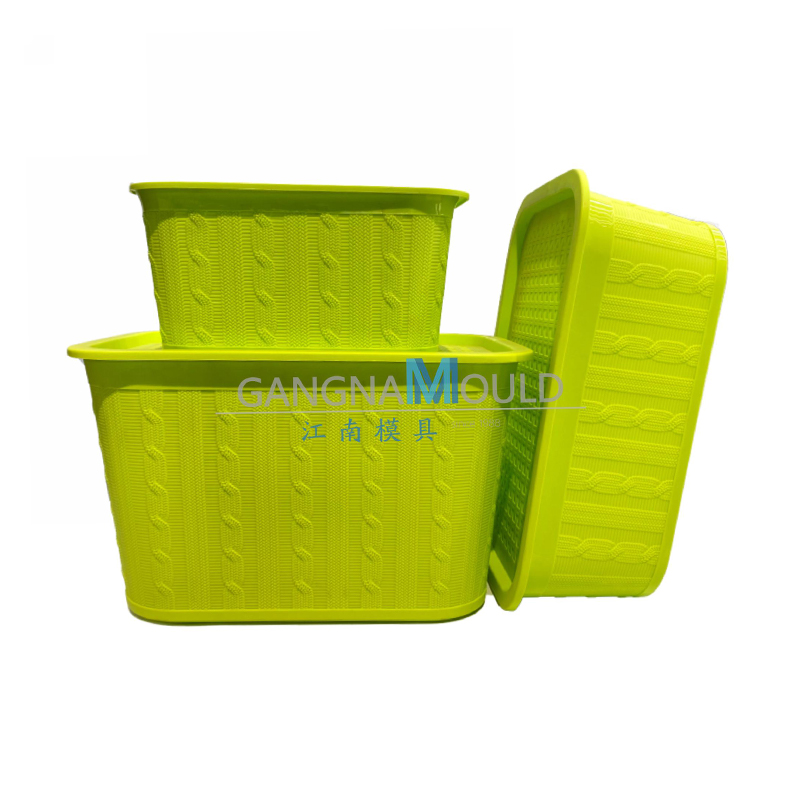
Material Compliance and Environmental Considerations
For crates used in food, medical, or logistics applications, material selection and compliance are important. Mould steels must meet durability and structural requirements. Certifications such as ISO or SGS may be required to meet quality and regulatory standards.
Environmental considerations are also incorporated in modern mould design. Efficient material usage, reduced scrap, and modular mould components contribute to sustainable manufacturing practices. Designs that allow partial component replacement can extend the operational lifespan of the mould.
Customer-Focused Solutions
Manufacturers offer a range of Crate Box Mould options to meet diverse production needs. Standard moulds are suitable for regular manufacturing processes, providing consistent output and reliable performance. For specific applications, custom mould designs can be developed to accommodate particular crate sizes, ventilation patterns, or compliance requirements, allowing businesses to align production with operational and regulatory expectations.
The integration of appropriate materials, efficient cooling systems, and automated mechanisms contributes to stable production cycles and uniform product quality. By addressing both standard and specialised requirements, crate box moulds enable manufacturers and end-users in logistics, retail, agriculture, and other sectors to maintain operational consistency while managing production costs effectively.
Overall, Crate Box Mould technology remains an essential component in plastic crate manufacturing, providing solutions that combine thoughtful design, production efficiency, and material compliance to support varied industry applications.
Previous Post
Quality and Efficiency with Plastic Bucket Mould
Next Post
Plate Tray Mold Production and Buyer Perspectives
Our Products.
Quick Links
Contact Information
- ADD: No. 268, Jinchuan Road, Xinqian Street, Huangyan District, Taizhou City, Zhejiang Province, China
- TEL: +86-(0)576-89191888
- E-MAIL: gm@gangnammould.com
Mobile
Copyright © Zhejiang Huangyan Jiangnan Mould Factory All Rights Reserved.

PP Mould
