


 English
 русский
 Español
 Français
 عربى
عربى 简体中文
简体中文
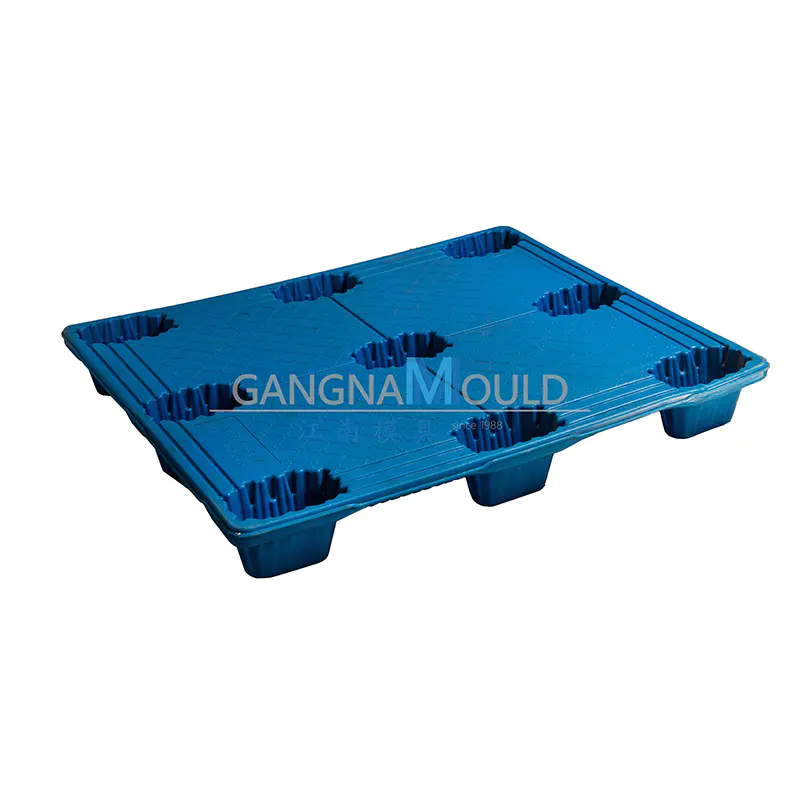
What Logistics Trends Are Driving Demand for Moulded Pallets
2026-09-18
A pallet may spend only a short time in front of the customer, sitting briefly at a loading dock before disappearing into a truck. But it can pass through genuinely many stages before reaching that point in the chain. It may move from a production site to a warehouse, then through a distribution center and onto a delivery vehicle. In some supply chains, the same pallet can continue through several handling cycles before returning to a storage or transport network entirely.
These changing logistics patterns are genuinely influencing how businesses think about pallet design from the ground up. A Moulded Pallet can provide a reusable platform for moving goods, while fitting into different handling environments scattered across a supply chain. Its value isn't limited to simply carrying products from point A to point B. Its shape, material, handling method, and ability to move through different logistics stages can all affect how it fits into the bigger picture.
Several trends are making these considerations genuinely more relevant to buyers today. E-commerce has created more frequent order movement across countless warehouses. Warehouses are using more automated equipment on their floors. Cross-border trade requires packaging to move through different transport stages entirely. At the same time, circular logistics is encouraging businesses to think about how packaging can get reused, rather than treated as a single-use item tossed aside.
How Is E-Commerce Changing Pallet Demand?
E-commerce has genuinely changed the way goods move through distribution networks across the country. Instead of sending large quantities to a small number of retail locations, businesses may handle many orders that get processed through warehouses and fulfillment centers scattered nearby.
This creates a genuinely different pattern of material movement throughout a facility. Products can be picked, sorted, grouped, stored, and dispatched within a relatively short period of time, sometimes hours.
| E-Commerce Activity | Pallet Requirement |
|---|---|
| Warehouse storage | Stable support for grouped goods |
| Order fulfillment | Easy movement between work areas |
| Product sorting | Practical handling during transfers |
| Distribution | Suitable support for transport |
| Returns processing | Reusable handling structure |
Pallets used in these environments need to fit into a workflow where goods are constantly being moved around the floor. A Moulded Pallet can get used as part of this process by providing a consistent base for handling grouped products moving through the system.
Its reusable nature can also suit logistics systems where packaging returns to a warehouse or distribution network after delivery. The growth of online ordering also means logistics networks need to manage products at different stages without unnecessary delays holding things up.
Pallet design becomes one of the smaller details that can genuinely influence how smoothly goods move between these stages throughout a busy season.
Why Is Circular Logistics Increasing Interest in Moulded Pallets?
Circular logistics focuses on keeping products and packaging in use through repeated movement, recovery, reuse, and redistribution across a network. This genuinely changes the way packaging gets viewed by procurement teams making purchasing decisions.
Instead of considering a pallet only as something that carries goods from one location to another, businesses can consider what happens to it after the delivery stage ends. Reusable pallets can remain within a logistics network, when collection and return systems are genuinely available to support them.
| Cycle Stage | What Happens |
|---|---|
| Departure | Goods leave a facility on reusable pallets |
| Transit | Pallets move through storage and distribution |
| Unloading | Goods are removed at their destination |
| Collection | Empty pallets get gathered or stored |
| Return | Pallets rejoin the network for another cycle |
Their continued use can support a genuinely different approach to packaging management, particularly for businesses with regular shipping routes running week after week. The practicality of this approach depends heavily on the supply chain itself and how it's structured.
If pallets are difficult to collect or move, their reusable design may not provide the expected operational benefit anyone hoped for. For this reason, pallet design and return logistics need genuine consideration together rather than as separate problems.
How Can Warehouse Automation Influence Pallet Design?
Warehouse automation is genuinely changing the way goods get moved inside distribution facilities across the industry. Automated systems may transport loads between storage areas, picking zones, sorting locations, and dispatch points throughout a shift.
These systems rely heavily on predictable handling conditions to function properly. A pallet doesn't need to perform the same task as an automated machine itself, but its dimensions, shape, stability, and consistency can genuinely affect how it moves through the surrounding workflow.
| Warehouse Process | Pallet Design Consideration |
|---|---|
| Goods receiving | Stable placement during unloading |
| Internal movement | Consistent handling surface |
| Storage | Suitable support for stacked goods |
| Sorting | Easy transfer between areas |
| Dispatch | Practical loading and unloading |
A pallet with a consistent structure can be a lot easier to position and handle repeatedly throughout a shift. This can be genuinely useful when goods move through areas where manual handling and automated movement get combined on the same floor.
A Pallet Mold therefore has a role that extends well beyond creating the visible shape of the finished pallet sitting in a warehouse. Mold design can influence how consistently the pallet structure gets produced batch after batch, which matters when pallets are intended for repeated handling over years.
Manufacturers need to consider the relationship between mold construction and the intended logistics environment, rather than treating production as a separate issue disconnected from actual use.
What Role Does Reusable Packaging Play in Modern Logistics?
Reusable packaging is gaining genuine attention because businesses are looking at how transport materials behave across multiple stages of a supply chain rather than just one leg. A pallet is naturally connected with this idea, because it can get designed for repeated handling, rather than a single shipment.
Reusable packaging can also simplify certain logistics routines that used to require constant reordering. A company may use the same pallet system across production, storage, transportation, and distribution, provided the pallet suits each stage along the way.
| Reusability Factor | Practical Requirement |
|---|---|
| Cleaning ease | Reduces turnaround delays |
| Movement simplicity | Supports repeated handling |
| Inspection access | Catches wear before failure |
| Storage compactness | Eases empty-pallet management |
This can create a genuinely more consistent handling process across the whole chain. For example, a manufacturer may prepare goods on reusable pallets before sending them to a distribution center miles away.
The same pallets can remain within the network after the products get unloaded, allowing them to be prepared for another shipment down the line. The design needs to genuinely support this pattern of repeated use.
A pallet that's difficult to clean, move, inspect, or store may create additional work within a reusable system rather than saving effort. Reusability therefore depends on practical product design, as well as the existence of a return process already in place.
How Does Cross-Border Transportation Affect Pallet Requirements?
Goods crossing national borders often pass through several transport environments before reaching their final stop. A shipment may move by road, rail, sea, or air before reaching its destination somewhere overseas.
Each transfer creates another handling point along the way, adding complexity. Pallets used in cross-border transportation need to remain practical as goods move between different logistics providers and facilities scattered across regions.
| Transport Stage | Pallet Consideration |
|---|---|
| Factory dispatch | Easy loading |
| Warehouse transfer | Stable handling |
| Port movement | Suitable for repeated transfers |
| International transport | Practical storage and handling |
| Destination delivery | Easy unloading and return |
Handling equipment may vary from one location to another entirely, so businesses often consider how easily a pallet can fit into different stages of transportation before committing to a design. Storage conditions can also change genuinely during a long journey spanning weeks.
A pallet may get loaded into a vehicle, moved through a warehouse, transferred to another transport method, and unloaded at a destination facility far from home. Cross-border transportation also makes pallet recovery a lot more complicated than domestic shipping.
A reusable pallet system works quite differently when pallets remain within a local network, than when they travel across several regions entirely. Businesses therefore need to consider whether pallets can realistically get collected, returned, and reused after international shipments complete.
Why Does Pallet Durability Matter in Repeated Logistics Cycles?
Repeated movement places genuinely ongoing demands on a pallet throughout its working life. It may get lifted, placed on a storage surface, moved through a warehouse, loaded onto a vehicle, and unloaded several times within a single week.
The pallet's structure needs to remain suitable for these repeated activities without failing prematurely. Durability doesn't mean that every pallet will behave the same way in every environment it encounters.
| Structural Area | Why It Matters |
|---|---|
| Load-supporting surfaces | Bears weight across cycles |
| Fork entry areas | Enables consistent equipment access |
| Base structure | Provides overall stability |
| Corners and edges | Resists impact during handling |
| Contact points | Withstands friction over time |
| Cleaning access | Supports hygiene between uses |
The actual service conditions depend on the goods, handling equipment, storage process, and transport network involved in each specific case. A reusable pallet should therefore get designed around its expected application from the start.
A Plastic Pallet Mold can be developed with these practical requirements genuinely in mind during the design phase. Mold design determines how the plastic material forms the pallet structure, so decisions made during mold development can influence the finished product's shape and handling characteristics for years.
This makes mold development part of the broader logistics conversation, rather than a purely technical afterthought.
How Can A Plastic Pallet Mold Support Consistent Production?
When pallets get used across a large logistics network spanning many facilities, consistency becomes genuinely important to operations. Buyers may need many pallets that can get handled in similar ways across every warehouse they touch.
A Plastic Pallet Mold supports the manufacturing process by defining the shape and structural layout of the pallet during production runs. The mold needs to correspond with the intended pallet design from concept through final approval.
| Mold Consideration | Production Purpose |
|---|---|
| Overall shape | Defines pallet structure |
| Support areas | Forms load-bearing sections |
| Handling openings | Creates access for equipment |
| Surface design | Shapes the upper platform |
| Mold maintenance | Supports continued production |
Features such as openings, support areas, handling spaces, and surface sections need to work together, rather than being considered separately during development. Manufacturers can also think about how the mold supports production efficiency and repeatability across thousands of units.
The manufacturing process is closely connected with product consistency throughout a production run. A well-planned mold can help manufacturers maintain the intended shape across production batches, while ongoing inspection can identify issues before pallets enter the logistics network and cause problems downstream.
What Does a Plastic Injection Mold Maker Need to Consider?
A Plastic Injection Mold Maker works at a genuinely important point between product design and pallet production, bridging two worlds. The manufacturer needs to understand how the pallet will actually get used once it leaves the factory floor.
A pallet designed for warehouse automation may have genuinely different requirements from one intended mainly for general storage and transport. The mold development process can therefore begin with the actual logistics application in mind from day one.
| Question | Design Impact |
|---|---|
| How will equipment interact with the pallet? | Shapes fork entry and contact points |
| Where does structural support belong? | Guides internal reinforcement |
| How will goods sit on the surface? | Influences platform design |
| Will it be cleaned and reused? | Affects material and surface choice |
| How will it be stored when empty? | Determines stackability features |
| Will it cross different transport systems? | Shapes overall durability targets |
These questions genuinely connect the mold with real logistics conditions rather than abstract specifications. A mold maker may also need to consider production maintenance over the life of the tool itself.
A pallet mold gets used repeatedly during manufacturing, so its design needs to support practical inspection, maintenance, and continued production over years of service. The relationship between mold maker and pallet manufacturer can therefore genuinely influence how effectively the finished product matches the intended logistics system it's built for.
Can Moulded Pallets Support Warehouse Space Management?
Warehouse space is genuinely valuable because goods are constantly entering, leaving, and changing position throughout every shift. Pallets influence how products get grouped and stored within that space efficiently or inefficiently.
A consistent pallet structure can help businesses organize goods into recognizable handling units that staff learn to work with quickly. This can make it genuinely easier to plan storage areas and move products between different warehouse zones without confusion.
| Storage Question | What It Addresses |
|---|---|
| How does the pallet handle goods? | Base stability during storage and movement |
| How does the pallet behave when empty? | Fit with return and storage process |
Empty pallets also require genuine space of their own, which often gets overlooked in planning. Reusable systems need a way to collect, stack, store, and redistribute unused pallets without creating clutter.
A pallet design that's practical when empty can therefore help simplify warehouse organization considerably. Manufacturers and logistics buyers can consider both conditions when selecting a pallet design for their operation.
How Are Logistics Networks Responding to Reverse Movement?
Traditional logistics often focuses on the movement of goods from supplier to customer, moving in one direction only. Reusable packaging adds another direction worth considering: the return of packaging after delivery completes.
This reverse movement can genuinely influence pallet selection decisions made by procurement teams. A business may need to collect empty pallets from customers, distribution points, or partner warehouses scattered across a region.
| Reverse Logistics Step | Practical Requirement |
|---|---|
| Collection from destination | Simple pallet identification |
| Return transport | Compatible with existing routes |
| Inspection on arrival | Quick condition assessment |
| Cleaning if needed | Suitable surface material |
| Storage until reuse | Compact stacking ability |
These pallets then need to return to a suitable location where they can get inspected, cleaned, stored, or used again for another cycle. The return process can become genuinely easier when pallet handling is kept simple throughout.
Businesses may also develop collection routines around regular delivery routes already running. A truck delivering new goods may return with empty pallets, creating a practical connection between outbound and reverse logistics without extra trips.
The success of this approach depends heavily on coordination between different parties involved in the chain. Pallet design alone can't create a circular system on its own, but a practical reusable pallet can genuinely become part of that system.
What Changes When Logistics Becomes More Flexible?
Supply chains are no longer limited to one fixed route running the same way year after year. Businesses may use different warehouses, fulfillment centers, transport providers, and distribution channels depending on demand and operating conditions that shift constantly.
This flexibility increases the genuine need for packaging that can move between different environments without friction. A Moulded Pallet can fit into this changing landscape, when its structure is suitable for several stages of material handling across the network.
| Logistics Change | Pallet Design Question |
|---|---|
| More fulfillment locations | Can pallets move between sites? |
| Increased automation | Does the structure suit handling systems? |
| Reusable packaging programs | Can pallets be returned and reused? |
| Cross-border shipping | Can the pallet fit different handling stages? |
| Reverse logistics | Is empty pallet movement practical? |
Its reusable nature can also make it genuinely relevant to logistics networks that move pallets between locations, rather than treating them as disposable transport materials to discard. For buyers, this means pallet selection may involve more than simply checking whether a pallet can carry goods from point A to point B.
The surrounding logistics system should also get considered as part of the decision, not as an afterthought once the pallet arrives.
How Can Pallet Manufacturers Respond to Changing Logistics Needs?
Pallet manufacturers are working within a logistics environment where product movement is becoming genuinely more varied by the year. E-commerce creates frequent warehouse activity that never seems to slow down. Automation changes how goods get handled on the floor. Circular logistics introduces return movement that wasn't there before. Cross-border transportation adds additional transfer points along every route.
These trends create genuinely different design considerations, rather than one universal requirement that fits every situation. Manufacturers can respond by examining how pallets interact with the entire logistics process from start to finish.
| Development Area | Connected Consideration |
|---|---|
| Material selection | Durability across handling cycles |
| Structural layout | Fit with automation and manual work |
| Mold design | Consistency across production runs |
| Handling access | Compatibility with equipment |
| Cleaning and storage | Practical reuse over time |
Material selection, structural layout, mold design, handling access, cleaning, storage, and reuse can all get considered as connected parts of product development rather than isolated boxes to check. A Pallet Mold may therefore need to support more than the basic shape of a pallet sitting on a shelf.
It can get developed around the intended handling environment from the outset, while a Plastic Pallet Mold can help translate that design into a repeatable production process across thousands of units. For companies involved in pallet manufacturing, this relationship between product design and logistics use is becoming increasingly important to get right.
The pallet is no longer simply a platform beneath a shipment, easily overlooked. It can become part of how goods, packaging, warehouse operations, and return flows genuinely connect with one another across a modern supply chain.
Previous Post
No previous article
Next Post
How Can Plastic Pallet Mold Design Improve Consistency
Our Products.
Quick Links
Contact Information
- ADD: No. 268, Jinchuan Road, Xinqian Street, Huangyan District, Taizhou City, Zhejiang Province, China
- TEL: +86-(0)576-89191888
- E-MAIL: gm@gangnammould.com
Mobile
Copyright © Zhejiang Huangyan Jiangnan Mould Factory All Rights Reserved.

PP Mould
