


 English
 русский
 Español
 Français
 عربى
عربى 简体中文
简体中文

How Can Plastic Pallet Mold Design Improve Consistency
2026-09-11
Plastic pallets may look simple when they're stacked in a warehouse or moved through a distribution area on a forklift, but producing them consistently turns out to be a different matter entirely. The large surface, repeated structural features, and regular production cycles place considerable demands on the mold used to form each pallet coming off the line.
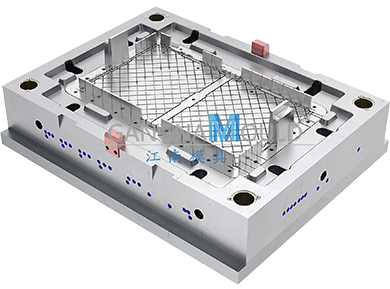
A Plastic Pallet Mold has to support more than the basic shape of the product sitting on a shelf drawing. Its structure influences how plastic fills the mold, how the pallet takes shape, how it leaves the mold, and how consistently the finished pieces can be produced batch after batch. Small differences between molded pallets can create genuine practical problems later on, since a pallet may need to fit a storage system, work with handling equipment, stack with other pallets, or maintain a predictable shape during repeated use out in the field. This makes mold design an important part of production consistency, and for manufacturers, this connection becomes especially important once pallet production moves into larger and more continuous orders that run for weeks at a time.
Why Does Mold Structure Matter for Plastic Pallet Production?
The structure of a Pallet Mold determines how the product gets formed from one area to another across a single piece. A pallet usually contains a broad deck, supporting sections, openings, edges, and reinforcing features, so the mold has to accommodate many shapes within one product at once.
If different areas respond differently during molding, the finished pallet may show variations in shape or surface condition that a warehouse worker notices right away when stacking. A well-planned mold structure helps make the forming process a lot more predictable across the whole product. Several structural areas deserve attention here.
| Mold Area | Production Consideration |
|---|---|
| Main deck | Supports the broad pallet surface |
| Support sections | Forms the lower structure |
| Reinforcing areas | Creates repeated structural features |
| Openings | Maintains intended spaces |
| Outer edges | Defines the pallet outline |
| Joining areas | Connects different structural sections |
These areas are not independent of each other in practice. A change in one section can influence how surrounding parts get formed and released once the mold opens. For this reason, mold structure should be considered as a complete system rather than a checklist. A Pallet Mold designed around the actual pallet structure can also make later production adjustments a lot easier to manage, since a mold reflecting the product's functional shape gives manufacturers a more practical foundation for handling repeated production runs.
How Can Molding Stability Affect Production Consistency?
Molding stability is closely connected with how consistent the finished pallets turn out to be across a shift. When the molding process behaves differently from one cycle to another, the resulting products may show visible or dimensional differences that show up during a quality check.
The mold plays a genuinely important role here, since it defines the space into which the material gets formed. Its surfaces, cavities, and structural arrangement all influence how the pallet takes shape during production. A stable molding process should allow the different parts of the pallet to form in a reasonably consistent way, though this doesn't mean every part of a large pallet behaves in exactly the same manner every time. The overall process should simply remain predictable enough to plan around.
Common production concerns can include:
- Uneven product formation
- Changes around structural features
- Variations between pallet edges
- Inconsistent surface appearance
- Differences between production cycles
These issues can become a lot more noticeable as production quantities increase over a longer run. A small variation that appears occasionally can turn into a repeated quality concern once the same molding cycle gets used many times in a row. Mold design can therefore influence consistency before the finished pallet ever reaches inspection at the end of the line. A thoughtful structure helps reduce unnecessary differences created during the forming stage itself.
How Does Mold Layout Influence Dimensional Consistency?
Dimensional consistency matters because plastic pallets often need to work with other equipment and storage arrangements already in place at a warehouse. Differences in the pallet's overall shape or key structural areas can affect how products stack, move, or fit together on a rack.
The mold establishes the basic dimensions of the finished product from the start. If the mold structure doesn't provide a balanced approach to the pallet's different sections, variations may appear once the piece comes out of the press. A large pallet can be particularly sensitive to changes, since its surface extends across a fairly wide area, and the relationship between the center, edges, support sections, and openings needs consideration during mold development.
| Product Area | Consistency Concern |
|---|---|
| Deck surface | Overall shape and flatness |
| Outer edge | Pallet outline |
| Leg or support area | Position and shape |
| Openings | Size and location |
| Reinforcing features | Repeated structural form |
The goal isn't making every part identical in function, since each area plays a different role in the finished pallet. What matters is that each area's shape stays consistent with the intended product design across every batch. For a manufacturer, this means dimensional control starts with how the mold is arranged in the first place. Inspection remains important down the line, but a suitable mold can help reduce variation well before that inspection ever takes place.
Why Is Demolding Design Important for Repeated Production?
A pallet can't really be called consistently produced if it forms correctly but is difficult to remove from the mold afterward. Demolding is part of the production process too, and the way a product leaves the mold can affect its final condition on the way to the pallet stack.
Complex pallet structures often include openings, recessed sections, and supporting features that create additional contact with the mold surface. These areas can make release an important design consideration worth thinking through early. If the product doesn't leave smoothly, several problems may appear right there on the line. Edges can get affected, small structural areas may experience stress, and the production process may require additional handling that slows everything down.
A suitable demolding design considers how the pallet separates from the mold after forming is complete.
| Demolding Consideration | Production Effect |
|---|---|
| Product release direction | Helps guide separation |
| Structural features | Reduces unnecessary interference |
| Edge design | Supports cleaner release |
| Opening design | Avoids unwanted contact |
| Ejection arrangement | Helps distribute release force |
The exact approach depends on the pallet structure and mold configuration in each case. What matters is that demolding gets considered during mold development, rather than getting added as an afterthought once problems start showing up on the floor. A Plastic Pallet Mold that supports predictable release can make repeated production a lot easier to manage day after day, and it also reduces the chance that a pallet's final condition gets affected during the removal stage itself.
How Can Mold Design Support Large-Scale Pallet Production?
Mass production changes the way mold consistency gets evaluated over time. A mold may appear suitable during limited production runs, but repeated cycles can reveal issues that stay less visible during short test batches.
For pallet manufacturers, the mold needs to remain practical throughout continued production stretching over weeks or months. Repeated opening, closing, forming, and demolding place ongoing demands on the mold structure that only show up gradually. This makes production planning part of mold design from the outset.
Manufacturers may need to consider several things together:
- How the pallet structure is divided within the mold.
- How material reaches different areas.
- How the product is released.
- How repeated cycles affect mold condition.
- How inspection can be integrated into production.
A Pallet Mold intended for repeated production should therefore get designed around the actual manufacturing routine it will face, not an idealized single run. The mold gets used many times, so small design weaknesses can become a lot more significant once production continues at scale. The relationship between mold structure and production planning also affects maintenance down the line. If important areas are easy to inspect and manage, manufacturers can catch changes before they turn into larger production concerns that halt a line.
What Should a Plastic Injection Mold Maker Consider During Development?
A Plastic Injection Mold Maker has to consider both the product drawing and the conditions in which the mold will actually get used on a factory floor. A pallet isn't simply a flat plastic item, so its large surface and structural features require careful coordination during development from the earliest sketches.
The product's intended use can influence the mold design quite a bit too. A pallet designed for stacking may have different structural priorities from one intended for repeated material handling or a particular storage arrangement at a specific client's warehouse. The development process can therefore include several areas worth reviewing together.
| Development Area | Main Question |
|---|---|
| Product structure | How should each pallet section be formed? |
| Mold layout | How should the different areas be arranged? |
| Material flow | Can the structure be formed consistently? |
| Demolding | How will the finished pallet leave the mold? |
| Inspection | Which areas require regular checking? |
| Maintenance | Which mold sections may need attention over time? |
Communication between the product designer and mold maker can also affect the final result quite a bit. If the intended pallet application gets understood early in the process, the mold can be developed around the actual product requirements, rather than only its external appearance on paper. This approach can help avoid later changes that come from discovering production difficulties only after the mold has already been built and tooled.
How Can Repeated Structural Features Affect Mold Consistency?
Plastic pallets often contain repeated support sections, openings, ribs, or other structural details scattered across the deck. These repeated elements need to remain visually and dimensionally consistent, since they contribute to the overall pallet structure a customer relies on.
If similar features get formed differently across a batch, the finished product may not have the same appearance or structural arrangement from one area to another. Repeated differences can also make inspection a lot more difficult, since workers need to distinguish between intended design variation and actual molding variation on the fly. Mold layout has an important role to play here. Repeated features should get arranged with attention to their position, surrounding space, and relationship with the wider pallet structure around them.
For example, several support sections may need to maintain a consistent relationship with the pallet deck above them. Openings may also need to stay aligned with the overall product layout so equipment fits through them properly. This makes repetition a design issue rather than simply a production issue to fix later. When repeated features are clearly represented in the mold from the start, the production process has a much more consistent reference for forming them every time. A Plastic Pallet Mold can therefore influence how easily manufacturers maintain uniformity across a product containing many similar structural elements.
How Does Mold Maintenance Relate to Long-Term Production Consistency?
Mold design and mold maintenance stay closely connected in practice. Even a carefully developed mold needs regular attention, since repeated production can gradually affect surfaces, moving sections, fastening areas, and other parts over hundreds of cycles.
Maintenance becomes a lot easier when the mold has been designed with inspection and access in mind from the start. If important areas can be checked without unnecessary disruption to the line, manufacturers can respond to changes as part of normal production management rather than an emergency shutdown. Several maintenance considerations prove useful in daily practice.
- Checking mold surfaces
- Inspecting moving sections
- Reviewing areas around repeated features
- Removing accumulated material
- Checking product release behavior
- Monitoring changes in molded parts
The purpose isn't simply extending mold use for its own sake. Maintenance also helps keep the molding process closer to its intended condition batch after batch. When a mold gradually changes over time, the finished pallet changes right along with it, and surface appearance, dimensions, release behavior, or structural details can drift away from earlier production runs without anyone noticing right away. For this reason, maintenance should be treated as part of consistency management, not a separate task handled by a different team entirely.
How Can Better Mold Design Reduce Variation Between Production Cycles?
Production consistency depends on many connected details rather than one isolated feature working in isolation. Mold structure, molding stability, dimensional control, demolding, maintenance, and production planning all influence how similar one pallet ends up being to the next one off the line.
A well-considered mold gives manufacturers a stable physical reference for repeated production runs. The product cavity defines the intended shape, while the surrounding structure supports forming and release throughout the process. The practical relationship can be laid out as follows.
| Mold Design Focus | Consistency Contribution |
|---|---|
| Clear structural layout | Supports repeatable product formation |
| Stable molding arrangement | Helps reduce cycle-to-cycle variation |
| Consistent product dimensions | Supports predictable pallet use |
| Practical demolding design | Reduces release-related issues |
| Accessible maintenance areas | Helps manage mold condition |
| Production-oriented structure | Supports repeated manufacturing |
Mold development should begin with the actual pallet rather than with the mold alone, sitting apart from its real use. The intended use, structural layout, production routine, and inspection needs all provide useful context for deciding how the mold should be arranged from day one. A Plastic Pallet Mold designed with these relationships in mind can give production teams a clearer foundation for managing consistency across long runs. For a Plastic Injection Mold Maker, the challenge is translating the pallet's functional structure into a mold that stays practical throughout repeated manufacturing, while a well-planned Pallet Mold can support that same goal through coordinated forming, dimensional control, release, and maintenance considerations working together.
Previous Post
What Logistics Trends Are Driving Demand for Moulded Pallets
Next Post
How Can a Plastic Injection Mold Maker Improve Pallet Quality
Our Products.
Quick Links
Contact Information
- ADD: No. 268, Jinchuan Road, Xinqian Street, Huangyan District, Taizhou City, Zhejiang Province, China
- TEL: +86-(0)576-89191888
- E-MAIL: gm@gangnammould.com
Mobile
Copyright © Zhejiang Huangyan Jiangnan Mould Factory All Rights Reserved.

PP Mould
