


 English
 русский
 Español
 Français
 عربى
عربى 简体中文
简体中文
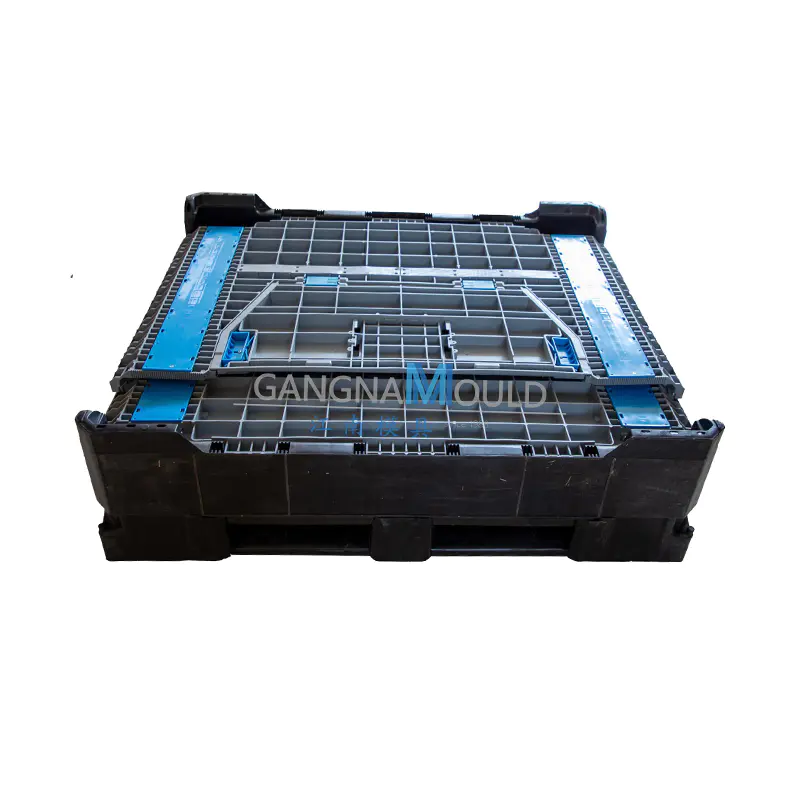
Plastic Pallet Mould Selection Single vs Multi Cavity
2026-07-03
Watching a production schedule slip because a mold cannot keep up with order volume, or sinking capital into extra cavities that then sit underused for months, both scenarios point to the same underlying decision that trips up plenty of manufacturers evaluating a Plastic Pallet Mould purchase. Getting the cavity count wrong is not a small miscalculation. It shapes production capacity, tooling cost, and machine compatibility for years after the mold goes into service.
For plastic pallet manufacturers, injection molding facilities, and procurement teams responsible for tooling investment, weighing single cavity against multi cavity configurations means looking past sticker price and thinking through how the mold will actually perform across a real production schedule.
What Actually Separates a Single Cavity Mold From a Multi Cavity One?
A single cavity mold produces one pallet per injection cycle, full stop. Simple, direct, and relatively straightforward to design and maintain. A multi cavity mold, by contrast, contains multiple identical cavities arranged within the same tool, allowing several pallets to come out of a single cycle at once.
That difference sounds obvious on paper, but the practical implications run deeper than just output count. Multi cavity tooling requires more precise mold flow balancing, since molten plastic needs to reach every cavity at roughly the same pressure and temperature to avoid inconsistent part quality between cavities.
Does More Cavities Automatically Mean Better Production Efficiency?
Not always, and this is where buyers sometimes get pulled toward multi cavity tooling without fully weighing the tradeoffs. More cavities mean more output per cycle, which sounds like an efficiency win, but it also demands a larger injection machine with sufficient clamping force to handle the combined cavity pressure. If the existing machine cannot support that demand, the buyer either needs new equipment or ends up with a mold that cannot run at its intended capacity.
How Does Cost Compare Between These Two Approaches?
Upfront tooling cost tends to favor single cavity molds, since the design and machining work involved is comparatively simpler. Multi cavity tooling costs more initially, both from the added complexity of cavity layout and the precision required to keep every cavity producing consistent parts.
Where the calculation shifts is production volume. A facility running high order volumes over an extended period often finds that the higher upfront cost of a multi cavity Plastic Pallet Mold pays back through reduced cycle count per unit produced, since each cycle generates multiple finished pallets rather than one. Lower volume operations, on the other hand, may never reach the point where that investment makes sense, since the mold would spend much of its working life underutilized.
Comparing Single and Multi Cavity Molds Side by Side
| Factor | Single Cavity | Multi Cavity |
|---|---|---|
| Upfront Tooling Cost | Lower | Higher |
| Output Per Cycle | One pallet per cycle | Multiple pallets per cycle |
| Machine Requirements | Lower clamping force needed | Higher clamping force needed |
| Maintenance Complexity | Simpler, fewer moving parts | More complex, requires cavity balancing checks |
| Best Suited Production Volume | Lower to moderate volume | High volume, continuous production |
| Part Consistency Risk | Lower, single reference point | Requires careful flow balancing across cavities |
Looking across this comparison, the deciding factor usually comes down to matching mold capability to actual production demand rather than simply picking whichever option promises higher output on paper.
Does Maintenance Get Harder With More Cavities?
Generally, yes, though not dramatically so if the mold is well designed from the outset. Multi cavity tools involve more components, more wear points, and a greater need for periodic checks to confirm every cavity continues producing parts within acceptable tolerance. A single cavity mold, with its simpler structure, tends to be easier and faster to service when something does eventually need attention, which matters for facilities without a dedicated tooling maintenance team on staff.
What Role Does Machine Compatibility Play in This Decision?
Injection machines carry a rated clamping force, and multi cavity molds place greater demand on that force since multiple cavities are filling and holding pressure simultaneously. Attempting to run a multi cavity mold on a machine without sufficient clamping capacity leads to flash, incomplete fills, or inconsistent part dimensions across cavities.
Buyers evaluating a mold purchase should confirm their existing machine capacity before committing to a cavity count, since discovering a mismatch after the tooling arrives creates a far more expensive problem than addressing it during the planning stage. In some cases, the smarter move involves scaling machine investment alongside mold investment rather than treating them as separate decisions.
When Does Production Volume Justify Multi Cavity Tooling?
A few practical questions help determine whether the added cost and complexity of multi cavity tooling actually makes sense for a given operation.
- Does current or projected order volume consistently require output beyond what a single cavity mold can reasonably supply within the available production schedule?
- Is the facility's injection machine capable of supporting the clamping force multi cavity tooling demands, or would new equipment be needed alongside the mold?
- Does the production team have the technical capacity to monitor and maintain cavity balance over the mold's working life?
- Would the cost difference between single and multi cavity tooling pay back within a reasonable production timeframe given current order patterns?
If the answers point toward sustained high volume demand and adequate machine capacity, multi cavity tooling tends to justify its higher upfront cost. If volume fluctuates or remains moderate, a single cavity approach often delivers a more practical return without overcommitting capital to unused capacity.
How Does This Choice Affect the Final Pallet Product?
Injection Molded Plastic Pallets produced from either mold type can achieve comparable quality when the tooling is designed and maintained properly. The distinction lies less in final product quality and more in how consistently that quality holds across a full production run. Multi cavity molds demand tighter process control to keep every cavity performing identically, while single cavity tools naturally avoid that variability simply by having only one reference point to manage. Facilities producing Moulded Pallets for demanding logistics or export markets should weigh this consistency factor alongside raw output numbers when deciding which tooling path fits their quality standards.
Bringing the Decision Together for Your Production Plan
Choosing between single cavity and multi cavity tooling ultimately comes down to matching mold capability to real production needs rather than defaulting to whichever option sounds more impressive during a sales conversation, since a Plastic Pallet Mould that outpaces actual demand ties up capital just as surely as one that cannot keep up with order volume falls short. Buyers who take time to evaluate current machine capacity, projected order volume, and available maintenance capability tend to land on a tooling decision that supports growth without overextending budget or introducing unnecessary process complexity. Zhejiang Huangyan Jiangnan Mould Factory works with manufacturers weighing exactly this kind of tooling decision, and sharing your target output volume, available injection machine specifications, and pallet dimensions is a practical way to start narrowing down whether single or multi cavity tooling fits your production plan best.
Previous Post
Open Deck vs Closed Deck Plastic Pallets Comparison Guide
Next Post
Choosing a Plastic Pallet Mould Supplier with Confidence
Our Products.
Quick Links
Contact Information
- ADD: No. 268, Jinchuan Road, Xinqian Street, Huangyan District, Taizhou City, Zhejiang Province, China
- TEL: +86-(0)576-89191888
- E-MAIL: gm@gangnammould.com
Mobile
Copyright © Zhejiang Huangyan Jiangnan Mould Factory All Rights Reserved.

PP Mould
