


 English
 русский
 Español
 Français
 عربى
عربى 简体中文
简体中文
Choosing a Plastic Pallet Mould Supplier with Confidence
2026-06-26
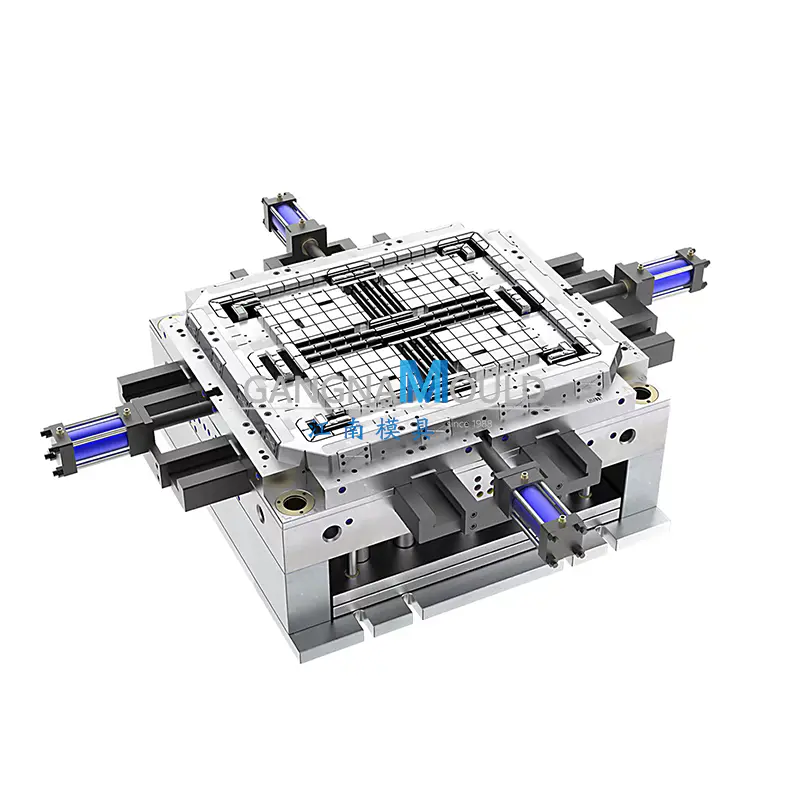
A pallet that cracks under load after barely any time in service. A production run that lands weeks behind schedule. A quote that looked fine on paper but turned into a string of costly revisions once tooling actually started. These setbacks are exactly why buyers sourcing a Plastic Pallet Mould need to slow down before signing anything, since the real cost of a wrong choice rarely shows up until the steel has already been cut and a warehouse full of flawed pallets is sitting there waiting to become someone's problem. Picking the right mould partner has very little to do with comparing quotes and grabbing the lowest number on the page. It comes down to how a factory actually designs, builds, and tests its tooling, and whether that process results in a mould capable of holding up reliably for years rather than months. What follows walks through the criteria that, in practice, tend to separate a supplier worth trusting from one that quietly becomes a liability somewhere down the road.
Why Mould Quality Determines Everything Downstream
A Poorly Built Mould Affects Every Pallet It Produces
Every pallet coming off an injection molding press carries the fingerprint of the mould that shaped it. Design flaws, uneven cooling, substandard steel — none of these problems stay contained to one bad batch. They repeat on every single cycle, for as long as that mould keeps running.
Is It Worth Paying More for a Better Built Mould?
Usually, yes. A mould priced higher upfront but built to hold tight tolerances over a longer working life tends to come out cheaper across the full lifecycle than a bargain tool that needs constant repair or gets retired early. The comparison that actually matters is not the number on the initial invoice. It is the total cost once you factor in everything the mould demands over its entire production life.
Steel Quality and Mould Construction
What Steel Grade Should the Mould Be Built From?
Steel choice shapes how long a mould can run before wear starts showing, and how well it survives the pressure and heat cycling involved in producing Moulded Pallets at volume. Buyers do well to ask suppliers directly which steel grades go into core components, and why that particular grade fits the pallet design being discussed.
How Mould Construction Affects Long-Term Performance
Good construction is about more than steel grade alone. It also comes down to:
- Precision in cavity machining, which keeps dimensions consistent cycle after cycle
- Hardening treatment on surfaces that take the most wear
- Quality of guide pins, bushings, and ejector systems that keep everything aligned through repeated use
- Cavity surface finishing, which influences how cleanly each pallet releases from the tool
Suppliers willing to walk through their construction process in real detail, rather than offering vague reassurance, tend to be the more transparent ones about what buyers are actually paying for.
Cooling System Design and Cycle Efficiency
Does Cooling Layout Really Matter This Much?
It does, far more than most buyers expect going in. Cooling is one of the most overlooked pieces of Plastic Pallet Mould design, yet it has a direct hand in both cycle time and the structural soundness of the finished pallet. Uneven cooling across a large cavity can leave warping, internal stress, or inconsistent wall thickness behind, and any of those weakens load-bearing performance over time.
How a Well-Designed Cooling System Improves Output
A properly engineered cooling layout spreads temperature evenly across the whole cavity, which tends to support:
- Shorter cycle times without giving up part quality
- More even wall thickness across the pallet structure
- Less internal stress, lowering the risk of premature cracking
- Fewer rejected parts during a production run
Suppliers who put real effort into cooling channel design early on usually end up with moulds that run more efficiently and turn out stronger, more consistent pallets year after year.
Cavity Configuration: Single Versus Multi-Cavity Moulds
Which Configuration Fits a Given Production Volume?
Choosing between single cavity and multi cavity tooling comes down largely to expected output volume and the physical size of the pallet involved. Multi cavity moulds push more parts out per cycle, but that comes with added complexity in keeping flow and cooling balanced across several cavities at once.
Trade-offs Buyers Should Understand Before Committing
| Configuration | Output per Cycle | Tooling Complexity | Upfront Cost | Best Suited For |
|---|---|---|---|---|
| Single-Cavity | Lower | Lower | Lower | Small production runs and larger pallet sizes |
| Two-Cavity | Moderate | Moderate | Moderate | Applications requiring a balance between output and investment |
| Multi-Cavity | Higher | Higher | Higher | High-volume production of standardized pallet sizes |
A supplier able to point a buyer toward the configuration that actually fits their production needs, instead of nudging them toward whatever benefits the supplier's own margins, tends to make for a stronger long-term partner.
Structural Design and Load-Bearing Considerations
How Is Load Capacity Built Into the Mould Design?
The strength behind an injection molded plastic pallet comes straight from how ribbing, deck thickness, and support structure were engineered into the mould in the first place. A pallet designed without enough reinforcement in the right places shows its weakness exactly where it counts most, typically along the corners and central support beams.
What Should Buyers Ask About Structural Testing?
Suppliers worth trusting test pallet designs under simulated load conditions before locking in a mould for production. It is reasonable to ask whether a supplier runs:
- Static load testing to confirm weight capacity while stationary
- Dynamic load testing that simulates handling and transport stress
- Drop testing to gauge how the pallet handles impact during loading and unloading
A supplier who hesitates to share this kind of testing information, or simply does not have it, is one worth approaching carefully.
Production Capability and Quality Control
Can the Factory Actually Scale to Match Order Volume?
Mould capability only tells half the story. Buyers also need real confidence that the supplier's production floor can run that mould consistently across large order volumes without quality slipping somewhere along the way. That means checking the factory's injection molding equipment, tonnage capacity, and overall throughput against the buyer's expected order size.
What Quality Control Steps Should Be in Place?
A dependable quality control process generally covers:
- Inspecting incoming raw material before production even starts
- In-process checks during early cycles, catching issues before a full run gets underway
- Dimensional verification against approved design specifications
- Visual inspection for surface defects, warping, or incomplete fills
- Batch sampling before shipment, confirming consistency across the whole order
Suppliers who document these steps and share them openly tend to build more confidence than ones who simply insist their quality is fine without showing the process behind it.
Experience With Moulded Pallets Specifically
Does General Mould Experience Translate to Pallet Production?
Not always, and this trips up more buyers than it should. Pallet mould design involves its own set of challenges, load distribution, large flat surfaces prone to warping, structural reinforcement, that differ quite a bit from smaller consumer product tooling. A factory with broad general mould experience but little pallet-specific work may underestimate exactly these challenges.
Questions That Reveal Real Pallet Mould Experience
To get a clearer read on a supplier's actual pallet experience, it helps to ask about:
- Previous pallet projects completed, including size ranges and load requirements involved
- Common issues that came up in pallet mould production and how they got resolved
- Typical lead times for pallet mould projects specifically, not general mould averages
- Design adjustments the supplier has made over time based on earlier pallet production challenges
A supplier with genuine pallet-specific background tends to answer these with concrete detail rather than rehearsed general statements.
Communication, Lead Time, and After Sales Support
How Transparent Is the Supplier During the Design Phase?
Clear, responsive communication during mould design review says a lot about how the rest of the relationship is likely to go. Suppliers who flag design concerns on their own, suggest improvements, and walk through their technical reasoning tend to be far easier to work with than those who simply follow instructions without much engagement.
What Happens After the Mould Is Delivered?
After sales support becomes important once a mould moves into full production. It is worth clarifying upfront:
- How the supplier handles mould maintenance or repair requests
- Whether spare parts for wear components are easy to get hold of
- What warranty terms apply to the mould itself
- How fast the supplier can respond if something goes wrong in production after delivery
A supplier who treats delivery as the finish line, rather than the start of an ongoing working relationship, tends to become hard to rely on the moment problems eventually surface.
Working through all of this before committing to a Plastic Pallet Mould supplier takes extra time upfront, no question. But it consistently saves buyers from the bigger headaches that come from discovering structural weaknesses, inconsistent cycle quality, or unreliable after sales support only once a mould is already deep into full production. Steel quality, cooling system design, cavity configuration, structural testing, and a factory's genuine track record with Moulded Pallets all feed into whether a mould investment pays off across its working life or turns into a recurring source of frustration instead. Buyers who take time to ask pointed questions, request testing documentation, and pay attention to how a supplier communicates during the design phase generally end up with partners capable of supporting long-term production needs rather than handling just one transaction and moving on. Zhejiang Huangyan Jiangnan Mould Factory works alongside buyers through each of these stages, from early design discussion through structural testing and ongoing production support, helping make sure the mould investment actually translates into pallets that hold up under real working conditions. Reaching out to talk through specific pallet requirements is a sensible next step for any buyer ready to move forward with a supplier built to meet these standards.
Previous Post
Plastic Pallet Mould Selection Single vs Multi Cavity
Next Post
How Injection Molded Plastic Pallets Reduce Product Damage
Our Products.
Quick Links
Contact Information
- ADD: No. 268, Jinchuan Road, Xinqian Street, Huangyan District, Taizhou City, Zhejiang Province, China
- TEL: +86-(0)576-89191888
- E-MAIL: gm@gangnammould.com
Mobile
Copyright © Zhejiang Huangyan Jiangnan Mould Factory All Rights Reserved.

PP Mould
