


 English
 русский
 Español
 Français
 عربى
عربى 简体中文
简体中文
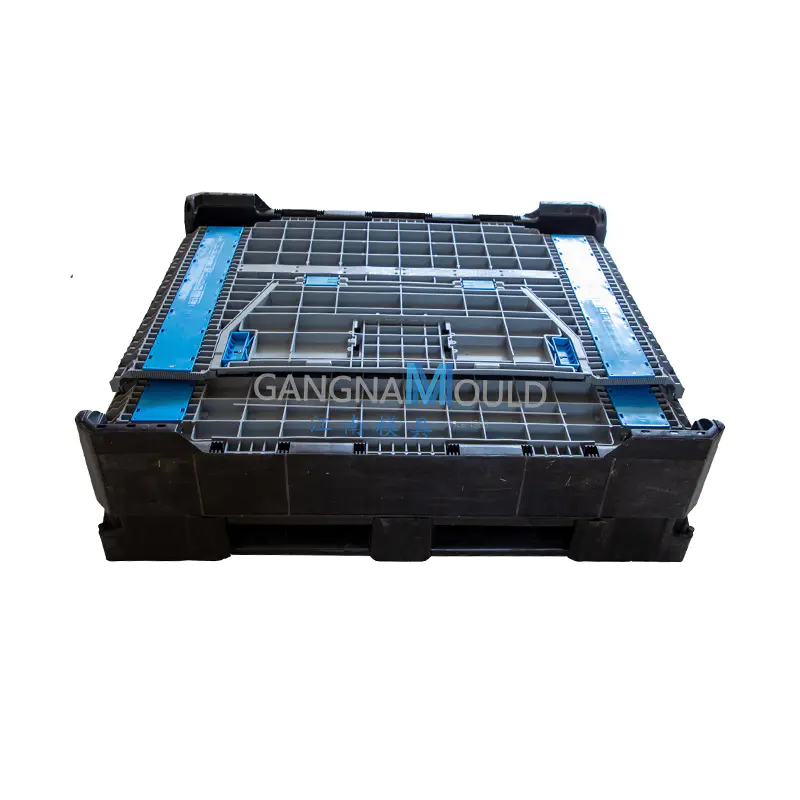
Open Deck vs Closed Deck Plastic Pallets Comparison Guide
2026-07-10
Standing in a warehouse aisle, weighing open deck plastic pallets against the closed deck version sitting right next to it, is a decision that trips up more logistics managers than anyone likes to admit out loud. On the surface, both look sturdy enough, both stack fine, both promise years of use. But get the choice wrong and you end up with drainage problems in a produce facility, or small parts vanishing through gaps in a pharmaceutical warehouse. Anyone who's already lived through either headache knows this comparison deserves more than a glance at a catalog photo. Getting it right starts with understanding what actually separates these two deck structures underneath the surface similarity, because that difference shapes performance in ways nobody notices until the pallets are already in daily rotation.
What Actually Separates Open Deck From Closed Deck Construction?
Open deck plastic pallets have gaps or slots running across the top, letting air, liquid, and debris pass straight through instead of sitting on the surface. Closed deck pallets go the other way entirely, presenting one solid, unbroken top that keeps everything, wanted or not, right where it landed.
Sounds like a small detail. It isn't. This one structural choice drives almost every other difference between the two designs, and once it clicks, the rest of the comparison gets a lot easier to follow.
Does This Structural Difference Really Change Anything in Practice?
It genuinely does, more than people expect walking into this comparison for the first time. Open deck construction breathes better and drains faster, which matters wherever moisture, spillage, or airflow needs come into play. Closed deck construction, meanwhile, keeps smaller items from slipping through and gives products a more even surface to rest against.
Neither one wins across the board. It really comes down to what's sitting on the pallet and what conditions that pallet has to survive.
Where Open Deck Pallets Earn Their Keep: Ventilation and Drainage
Products needing airflow, or facilities dealing with moisture on a regular basis, tend to gravitate toward open deck plastic pallets for a pretty obvious reason. Liquid that would otherwise pool on a flat surface just passes through the gaps instead.
This drainage advantage shows up clearly in a few places:
- Fresh produce storage, where airflow keeps moisture from building up and speeding along spoilage
- Warehouses dealing with occasional spills or condensation, where drainage stops liquid from just sitting there
- Situations needing pallets that dry fast after cleaning, since open structures let water escape rather than puddle
Why Does Drainage Matter This Much for Certain Industries?
Businesses handling perishables or anything sensitive to moisture buildup feel the consequences fast when drainage doesn't work. Standing water underneath stored goods speeds up spoilage, invites mold, and creates hygiene issues that closed deck surfaces struggle to shake off without someone actively cleaning them.
Facilities dealing with these moisture-heavy conditions almost always find open deck construction solves something closed deck pallets just weren't built to handle as well.
Where Closed Deck Pallets Pull Ahead: Surface Protection
Closed deck plastic pallets give you one continuous surface, which matters a lot when smaller products could otherwise slip through open deck slots during handling or shipping.
This solid-surface advantage really shows up in a handful of situations:
- Small parts or components that would fall right through open deck gaps
- Products needing a perfectly flat, even surface to avoid pressure marks or lopsided weight distribution
- Settings where debris passing through open decks would create cleanliness problems underneath stored inventory
Does a Solid Surface Automatically Mean Better Protection Overall?
Not really, no, though it does solve specific problems open deck designs simply can't touch. Closed deck pallets stop small items from disappearing and keep the surface consistent, but they don't handle ventilation or drainage at all, which means moisture or debris can just sit there instead of draining away like it would on an open deck.
Recognizing that tradeoff, rather than assuming closed deck automatically wins on protection, helps buyers actually match design to what they're handling instead of picking whichever option sounds safer on paper.
Side by Side: Open Deck Versus Closed Deck Plastic Pallets
| Factor | Open Deck Plastic Pallets | Closed Deck Plastic Pallets |
|---|---|---|
| Ventilation and drainage | Strong, lets air and liquid pass through | Limited, surface holds onto moisture and debris |
| Small item retention | Weaker, items can slip through the gaps | Strong, solid surface keeps everything in place |
| Cleaning and drying | Dries faster thanks to the open structure | Slower to dry, water tends to pool |
| Surface uniformity | Broken up by gaps and slots | Continuous, even contact surface |
| Common industry fit | Fresh produce, food handling, wet environments | Pharmaceuticals, small parts, clean-surface needs |
Matching Deck Design to What Your Industry Actually Needs
Different industries care about different things, moisture handling, product protection, cleanliness, and those priorities usually point pretty clearly toward one design over the other.
- Food and beverage operations often lean open deck, since ventilation supports freshness and drainage handles spills without letting anything pool
- Pharmaceutical and medical supply storage tends to favor closed deck, given how much weight gets put on preventing small item loss and keeping surfaces clean
- General manufacturing sometimes runs both designs side by side within the same facility, matching deck type to whatever's stored in each specific zone
- Export shipping occasionally leans open deck too, thanks to lighter weight and better ventilation across longer transit stretches
Should a Business Just Pick One Design and Stick With It Everywhere?
Not necessarily, and plenty of bigger operations actually do better running both designs strategically rather than forcing one to cover every need. A facility handling fresh produce alongside packaged pharmaceutical goods, say, might reasonably use open deck pallets in one section and closed deck in another, matching each zone to what it's actually handling instead of settling for one compromise choice everywhere.
Durability and Upkeep Across Both Designs
Beyond the structural split, open deck and closed deck plastic pallets generally hold up about the same when manufactured to similar quality, though the maintenance routine shifts a bit depending on which structure you're working with.
- Open deck pallets usually clean and dry quicker, since water and debris pass straight through instead of needing to be wiped off a solid surface
- Closed deck pallets sometimes need more thorough cleaning attention, since anything that would've drained through an open deck just sits on top instead
- Both designs benefit from regular checks for cracking or wear, especially anywhere handling happens frequently
- Weight capacity should get confirmed against actual load needs no matter which deck type you're looking at, since the structural difference can affect how weight distributes
Does Deck Design Change How Long a Pallet Actually Lasts?
Not dramatically, assuming both come from comparable manufacturing quality. What really affects lifespan is whether the design actually fits the job. A closed deck pallet sitting in a consistently wet environment might take more surface damage over time than an open deck alternative would in that same spot, simply because the moisture has nowhere to go.
Matching the design to the actual application, rather than assuming one option just outlasts the other no matter what, gives facilities a far more realistic sense of what to expect long term.
Automation Compatibility: An Increasingly Relevant Factor
Facilities bringing automated material handling into the mix increasingly need to think about how pallet design plays with that equipment, since not every deck structure behaves the same inside a robotic or conveyor-driven system.
- Open deck designs sometimes work better with sensor-based automation that relies on light or proximity detection passing through the gaps
- Closed deck designs offer a steadier surface for automated systems that need flat contact for stability during lifting or positioning
- Facilities planning automation upgrades should check pallet compatibility with their specific equipment before locking in a large-volume order
Why Does This Matter More Now Than It Used To?
Warehouse automation has spread fast across plenty of industries, and facilities investing in it are finding that pallet choice affects system performance in ways that just didn't come up back when most handling was manual. Confirming compatibility between the pallet design chosen and whatever automation equipment is already running, or about to be installed, avoids a costly mismatch discovered only after the system's already up and running.
A Practical Path to Choosing the Right Design
Rather than defaulting to whatever design seems more common across the industry, working through a few concrete questions helps match the choice to what your operation actually needs.
- Figure out whether what you're storing or shipping actually needs ventilation, drainage, or moisture control
- Decide whether small item retention or surface uniformity matters more for your specific products
- Look at your existing cleaning and maintenance routine, and which design fits it more naturally
- Check compatibility with any automated handling systems already in place or planned
- Consider whether different zones within the same facility might actually benefit from different deck designs instead of one blanket choice
Working through these questions properly, rather than choosing purely on cost or whatever's most common in the industry, helps a business land on a pallet design that genuinely supports its actual storage and handling needs.
Finding a Manufacturer That Handles Both Designs Well
Sourcing plastic pallets from a manufacturer that produces both open deck and closed deck options gives buyers room to actually match design to application, rather than getting stuck with whatever single option a more limited supplier happens to offer.
Worth asking potential manufacturers about:
- Whether they actually produce both deck design categories, not just one
- Customization options for specific weight capacity or sizing needs
- Quality control that keeps durability consistent across both design types
- Guidance on matching deck design to your specific industry, based on real manufacturing experience
Choosing between open deck plastic pallets and closed deck alternatives really comes down to being honest about what your products and operating environment actually demand, rather than assuming one design just wins everywhere regardless of the situation. Ventilation-heavy applications and moisture-prone environments generally lean open deck, while operations prioritizing small item retention and surface uniformity tend to favor closed deck instead, and plenty of larger operations reasonably run both across different zones in the same facility. Zhejiang Huangyan Jiangnan Mould Factory works with businesses sorting through exactly this kind of decision, helping match pallet structure to the real storage, transport, and handling demands each operation actually faces. Reach out with product details or storage conditions, and the conversation about which pallet design fits your business can start from there.
Previous Post
What Are Moulded Pallets and Why Are They Used in Logistics
Next Post
Plastic Pallet Mould Selection Single vs Multi Cavity
Our Products.
Quick Links
Contact Information
- ADD: No. 268, Jinchuan Road, Xinqian Street, Huangyan District, Taizhou City, Zhejiang Province, China
- TEL: +86-(0)576-89191888
- E-MAIL: gm@gangnammould.com
Mobile
Copyright © Zhejiang Huangyan Jiangnan Mould Factory All Rights Reserved.

PP Mould
