


 English
 русский
 Español
 Français
 عربى
عربى 简体中文
简体中文
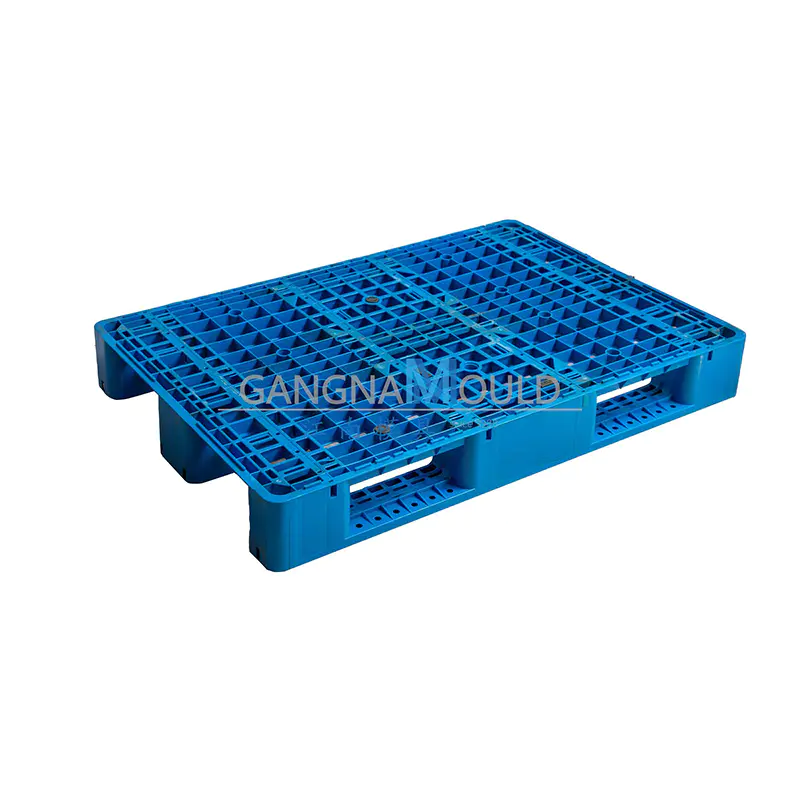
How to Extend the Service Life of a Plastic Pallet Mould
2026-05-22
A mould that runs reliably for hundreds of thousands of cycles is not the result of good luck — it is the result of a deliberate maintenance approach applied consistently from the day it enters production. Injection moulding facilities that treat their tooling as expendable tend to replace it far earlier than necessary, absorbing costs that systematic care would have avoided. A Pallet Mould represents a significant capital investment, and the decisions made in daily operations, scheduled maintenance intervals, and storage between production runs directly determine how long that investment continues to deliver value.
Why Pallet Moulds Degrade Faster Than Other Tooling
The Operating Conditions Create Compounding Wear Over Time
Plastic pallet production runs on high-volume cycles, often with materials like HDPE or PP that carry abrasive fillers or recycled content with variable properties. Each cycle subjects the mould to injection pressure, thermal cycling as the cavity heats and cools, and mechanical movement in the ejector system and sliders. Individually, none of these stresses are severe. Accumulated across tens of thousands of cycles without intervention, they produce measurable wear at the contact surfaces.
The practical effects show up as:
- Dimensional drift in the finished pallet — small changes in the cavity that cause parts to run out of specification
- Ejection problems — pins that no longer move smoothly, leaving marks or drag on the part surface
- Flash at parting lines — a gap that has developed through repeated clamping pressure over time
- Cooling inefficiency — blocked or scaled cooling channels that slow cycle time and create thermal inconsistency
None of these problems appear suddenly. They develop gradually, which is exactly why a maintenance schedule that catches them early is more cost-effective than reactive repair after the problem becomes visible in the finished product.
Daily and Per-Shift Maintenance Tasks
Routine Care Prevents Small Issues From Becoming Expensive Repairs
Daily maintenance is not glamorous, but it is the layer of care that protects everything else. The tasks that belong in a per-shift or daily routine for a running pallet mould include:
- Cavity and runner inspection: Check for material buildup in the runner system, gate area, and cavity surfaces. Buildup that is not cleared between shots can cause flash, short shots, or surface defects in the finished part.
- Ejector pin check: Verify that pins are moving freely and returning fully. A pin that sticks or drags indicates either contamination around the pin bore or early wear at the pin-to-bore interface.
- Parting line cleaning: Remove any flash or material residue from the parting line surfaces before the next production run begins. Running a mould with debris on the parting line causes progressive damage to the sealing surface.
- Visual check for water or oil leaks: Inspect the cooling channels and hydraulic connections if the mould uses hydraulic actuation. A small leak that is not addressed becomes a contamination source in the mould cavity.
These tasks take minutes per shift. Skipping them regularly creates repair situations that take days to address.
Lubrication: What to Apply, Where, and How Often
Correct Lubrication Protects Moving Parts Without Contaminating the Cavity
Lubrication in a pallet mould focuses on the mechanical components that move during each cycle. The ejector system, slider guides, leader pins, and bushings all benefit from regular lubrication with appropriate compounds.
A few principles that govern effective mould lubrication:
- Use lubricants specified for mould maintenance — general-purpose greases may contain compounds that degrade seal materials or attract contamination
- Apply lubricant to pins and bushings sparingly. Excess lubricant migrates into the cavity area and contaminates the part surface or attracts debris
- Slider tracks need lubrication at a frequency matched to their cycle count — sliders that move on every cycle accumulate wear faster than components that move less frequently
- Leader pins and bushings should be checked and lubricated as part of any scheduled maintenance interval, not only when stiffness is noticed
Over-lubrication is a real problem that is at least as common as under-lubrication. The goal is a clean, protected surface — not a wet one.
Cooling Channel Maintenance and Its Effect on Cycle Efficiency
Blocked Cooling Channels Cost More Than Just Cycle Time
The cooling system in a pallet mould determines how quickly heat is removed from the part after injection and how evenly the part solidifies across its cross-section. When cooling channels become scaled with mineral deposits or partially blocked by corrosion, the heat removal rate drops, cycle times increase, and thermal gradients across the mould create differential shrinkage in the finished pallet.
Cooling channel maintenance involves:
- Periodic flushing with descaling or cleaning solutions compatible with the mould steel and sealing materials
- Inspection of flow rates through each cooling circuit — a reduced flow rate indicates partial blockage before it becomes a complete obstruction
- Checking seals at water inlet and outlet connections, since a weeping seal gradually introduces water to the mould exterior where it causes surface rust
- Verifying water temperature consistency across circuits, which affects part quality in large-area moulds like pallet tools where uniform cooling is important for dimensional stability
A mould that is regularly cleaned in its cavity but has neglected cooling channels will progressively lose cycle efficiency in ways that show up as production output reduction before they show up as visible part defects.
Inspection Intervals and What to Check at Each Stage
How Often Should a Pallet Mould Be Formally Inspected?
The answer depends on cycle count, material type, and production environment — but the principle is that inspection should happen on a schedule, not in response to a problem. Reactive inspection after a quality event means the degradation that caused the event has already accumulated across an unknown number of cycles.
A practical inspection framework organizes checks by frequency:
Per run / per shift:
- Cavity surface condition
- Parting line cleanliness
- Ejection function
Every scheduled maintenance interval (cycle-count based):
- Dimensional check of critical cavity features
- Ejector pin wear measurement
- Slider and guide wear inspection
- Cooling flow rate verification
- Gate and runner surface condition
Annual or major overhaul:
- Full disassembly and component measurement
- Steel surface inspection for fatigue cracks or stress marks
- Seal and O-ring replacement
- Cooling channel descaling
- Reassembly with updated maintenance log
The maintenance log is worth addressing specifically. A written record of what was inspected, what was found, and what was replaced at each interval provides the data needed to identify wear patterns, predict replacement needs, and demonstrate to production management that the mould is being managed proactively.
Storage: Preventing Damage When the Mould Is Not in Production
Improper Storage Is One of the Overlooked Causes of Premature Mould Failure
A pallet mould that is stored for weeks or months between production runs faces a different set of threats than one in continuous use — primarily corrosion. Steel mould surfaces exposed to atmospheric humidity, particularly in unheated storage areas or in environments with temperature cycling that causes condensation, will develop rust on cavity surfaces, ejector pins, and parting line faces.
Storage preparation steps that protect against this:
- Clean all cavity and runner surfaces thoroughly before storage — residual material left in the mould traps moisture and accelerates corrosion
- Apply anti-rust oil or rust-inhibiting compound to all steel surfaces, including cavity faces, parting lines, leader pins, and ejector pins
- Close the mould and block it in its closed position to protect the cavity surfaces and prevent the parting lines from being damaged by accidental contact
- Store in a location with controlled temperature and humidity where possible, or use desiccant packs inside the mould and in the storage packaging if controlled storage is not available
- Document the storage condition and the date the rust inhibitor was applied, so it can be refreshed if storage extends beyond the inhibitor's effective period
A mould brought out of storage and immediately put into production without checking the rust inhibitor condition, the ejector pin function, and the cooling connections is a mould that will likely produce its opening runs with avoidable quality issues.
Comparing Maintenance Impact on Mould Lifecycle
How different levels of maintenance practice affect the operational life and repair cost of a pallet mould across its service period:
| Maintenance Level | Cycle Frequency | Typical Failure Mode | Repair Frequency | Relative Lifecycle Cost |
|---|---|---|---|---|
| No formal maintenance | None | Sudden dimensional failure, ejection damage | Reactive, unplanned | High |
| Basic cleaning only | Per run | Gradual cavity wear, flash at parting line | Periodic, reactive | Moderate to high |
| Cleaning and lubrication | Per interval | Slower wear, occasional ejector issues | Scheduled | Moderate |
| Full preventive maintenance system | Cycle-count based | Predictable wear at known components | Planned replacement | Low over full lifecycle |
| Full preventive + storage protocol | As above + stored correctly | Extended inter-production storage life | Minimal between runs | Reduced over full lifecycle |
The cost difference between reactive and preventive maintenance compounds over the full service life of the mould. A mould that reaches a production milestone without a major repair event has generated significantly more output per unit of tooling investment than one that required mid-life refurbishment.
Selecting a Mould Supplier With Maintenance Support in Mind
Does the Supplier's Design Affect How Easy the Mould Is to Maintain?
It does, more directly than many buyers consider during the initial purchase decision. A mould designed with maintenance access in mind — clearly identified cooling circuit inlets and outlets, ejector systems with standardized pin sizes, sliders with accessible lubrication points — is easier and faster to maintain than a mould where these elements require full disassembly to reach.
- During supplier evaluation, questions worth raising about maintenance design include:
- Are ejector pins available as standard replacement components, or are they custom-ground items that take extended time to source?
- Are cooling circuit diagrams included in the mould documentation?
- What steel grade is used in the cavity and core, and what is the manufacturer's guidance for maintenance interval based on that grade?
- Is a maintenance manual or recommended service schedule provided with the mould?
The answers to these questions reveal how a supplier thinks about the mould's service life, not just its initial performance. A manufacturer that provides documentation, uses standardized components, and designs for maintenance access is offering a different level of long-term value than one that simply delivers a functional mould and considers the transaction complete.
Building a Mould Maintenance Program That Protects Long-Term Production Value
A pallet mould that receives consistent, scheduled maintenance over its service life produces more parts, requires fewer emergency repairs, and delivers a lower total cost of ownership than one that is run hard with minimal intervention until a failure forces a stop. The investment in systematic care — daily cleaning, scheduled lubrication, periodic inspection, proper storage — pays back through extended production uptime and deferred replacement cost. For production managers, tooling engineers, and procurement teams evaluating plastic pallet moulds and the supplier relationships that support them, Zhejiang Huangyan Jiangnan Mould Factory manufactures plastic pallet moulds and provides product documentation and technical support for buyers who need a clear maintenance framework alongside the tooling itself. Reaching out to discuss mould specifications, steel selection, maintenance design features, or production volume requirements is a practical starting point for a tooling relationship that delivers value across the full operational lifecycle.
Previous Post
How to Maintain Plastic Pallet Mould for Longer Use
Next Post
What Factors Affect the Quality of Products Made by Storage Box Injection Mould?
Our Products.
Quick Links
Contact Information
- ADD: No. 268, Jinchuan Road, Xinqian Street, Huangyan District, Taizhou City, Zhejiang Province, China
- TEL: +86-(0)576-89191888
- E-MAIL: gm@gangnammould.com
Mobile
Copyright © Zhejiang Huangyan Jiangnan Mould Factory All Rights Reserved.

PP Mould
