


 English
 русский
 Español
 Français
 عربى
عربى 简体中文
简体中文
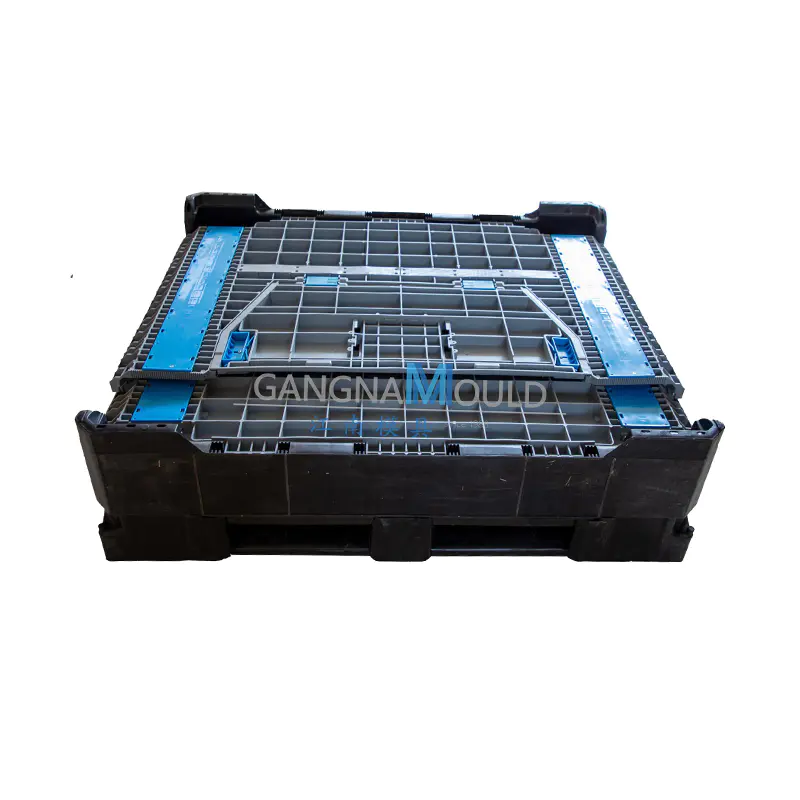
How Injection Molded Plastic Pallets Reduce Product Damage
2026-06-19
A shipment arrives with crushed corners and broken seals. The outer wrapping looks fine, but inside the boxes are damaged. The carrier blames the loading method. The warehouse blames the driver. No one looks at the pallet. Yet the pallet sits at the bottom of every stack. A warped board, an uneven surface, or a loose nail can turn a smooth trip into a costly loss. Many logistics professionals have seen this happen and wondered what went wrong. Injection Molded Plastic Pallets offer a different approach. These pallets come from a controlled manufacturing process that produces consistent shape, predictable strength, and reliable performance. Understanding how they work requires looking at pallets as part of a transport protection system.
Understanding Injection Molded Plastic Pallets as a Transport System
A pallet does more than hold boxes off the floor. It serves as an interface between the ground, the handling equipment, and the product load. A good pallet distributes weight evenly. A poor pallet concentrates pressure in certain spots.
Injection Molded Plastic Pallets are made by forcing melted plastic into a carefully shaped cavity under high pressure. The material fills every part of the cavity. Once cooled, the pallet comes out as one solid piece. No separate parts fastened together. No glued joints.
Why Pallets Are a Structural Component of Logistics Safety
Safety in logistics means keeping products intact from departure to arrival. The pallet sits at the bottom of every stack. If the pallet fails, everything above fails. A cracked wooden pallet collapses. A warped plastic pallet tilts.
A pallet that holds its shape under load protects the products above. A pallet that flexes too much transfers bending forces into the lowest layer of boxes. Those boxes then crush or deform. The damage starts at the bottom and works upward.
How System Design Impacts Transport Stability
A transport system includes the pallet, the wrapping material, the stacking pattern, and the vehicle suspension. Change any one part and the whole system behaves differently. Injection molded pallets fit into this system with known dimensions and consistent performance.
A warehouse worker knows that every pallet from a given mold has the same height, the same flatness, and the same support points. This consistency allows other parts of the system to work properly. A stretch wrapping machine set for a specific pallet size works every time.
The Role of Plastic Pallet Mould in Manufacturing Consistency
The mold determines everything about the final pallet. A precise mold produces precise pallets. A worn or poorly made mold produces inconsistent results. The relationship between mold quality and pallet performance is direct.
Why Mould Precision Directly Affects Load Performance
A Plastic Pallet Mold consists of two halves that close together to form a cavity. Melted plastic flows into that cavity. Any variation in the cavity shape shows up in every pallet made from that mold. A mold with accurate dimensions produces pallets that sit flat on any surface.
Critical areas of the mold include the top surface, the bottom runners, and the internal rib structure. A mold that maintains consistent thickness across the top surface produces a pallet that supports weight evenly. A mold with thickness variation produces weak spots.
How Manufacturing Uniformity Reduces Transport Risk
Injection molding produces identical parts across many cycles. A factory setting up a mold and running production for a week produces pallets that are virtually the same. This uniformity matters in logistics. A shipping manager ordering a batch of pallets knows what to expect.
Every pallet fits the same rack. Every pallet accepts the same forklift forks. Every pallet sits flat on the same trailer floor. Wooden pallets cannot offer this uniformity. A wooden pallet from one batch may have thicker boards or different nail placement.
How Injection Molding Improves Structural Strength
The injection molding process itself contributes to pallet strength. High pressure forces plastic into every corner of the mold. The material packs tightly. Air pockets and voids are pushed out. The resulting part has consistent density throughout.
Why One-Piece Molding Improves Stability
A wooden pallet has many separate pieces. Top boards fastened to stringers. Stringers fastened to bottom boards. Each fastener creates a potential failure point. A nail works loose over time. A screw strips. The wood around a fastener splits under stress.
An injection molded plastic pallet has no fasteners. The whole structure comes from one piece of material. Stress applied to any part of the pallet distributes through the continuous structure. No weak points where pieces join. The pallet behaves as a single unit.
| Dimension | Basic Food Products | Premium Food Products |
|---|---|---|
| Ingredient sourcing | Standardized commodity supply | Traceable, selected, often single-origin |
| Production scale | High volume, efficiency-driven | Smaller batch, quality-driven |
| Quality control threshold | Meets regulatory requirements | Exceeds regulatory requirements |
| Packaging investment | Functional, cost-managed | Material quality, design-forward |
| Price positioning | Competitive, volume-driven | Value-based, margin-driven |
| Consumer target | Broad market, price-conscious | Quality-conscious, values-driven |
| Brand narrative | Product-centric | Origin and process-centric |
| Distribution channel | Mass retail, wide availability | Specialty retail, selective distribution |
| Export market fit | Volume export, commodity markets | Premium international channels |
| Sustainability integration | Compliance-level | Active differentiation tool |
How Material Flow Affects Strength Distribution
During injection molding, plastic flows through the mold cavity from the injection point outward. The flow pattern affects how material properties distribute across the pallet. A well designed mold creates balanced flow. The plastic reaches all areas at roughly the same temperature and pressure.
A poorly designed mold creates flow imbalances. Some areas fill early and cool before others. Weld lines form where two flow fronts meet. These weld lines can be weaker than the surrounding material. Good mold design minimizes weld lines or places them in low stress areas.
How Molded Pallets Reduce Product Damage During Transportation
Damage during transport happens through several mechanisms. Vibration works products loose. Shifting loads crush against each other. Uneven support bends packaging. Injection molded pallets address each of these mechanisms through controlled design.
How Structural Uniformity Prevents Load Shifting
A load shifts when the pallet surface does not provide consistent friction or when the pallet bends under weight. An injection molded pallet can include textured surfaces that grip boxes. The texture stays consistent across the entire top surface. No smooth spots from worn boards.
The pallet top surface sits flat when the pallet is new and stays flat through many uses. Wooden pallets develop raised splinters, depressed areas around nail heads, and uneven wear patterns. Boxes sitting on an uneven surface tilt and slide.
Why Stability Reduces Breakage Risk in Transit
Stability means the load does not move relative to the pallet. An injection molded pallet with a well designed bottom structure engages correctly with forklift forks and trailer floors. The pallet does not rock. The load does not sway.
Breakage often happens at the moment a pallet is lifted or set down. A forklift inserting forks into a warped wooden pallet may lift unevenly. One side of the pallet rises before the other. The load tilts. Products slide off or fall against each other. An injection molded pallet with precise fork entry points lifts evenly every time.
Plastic vs Wooden Pallets in Transport Protection
Comparing plastic and wooden pallets requires looking at how each material behaves under real shipping conditions. Wood has been used for decades. It is familiar and widely available. Yet familiarity does not equal performance in every situation.
When Plastic Pallets Perform More Reliably
Plastic pallets handle moisture better. A wooden pallet left in rain absorbs water. The boards swell. The structure warps. A warped pallet cannot support a load evenly. A plastic pallet exposed to the same rain shows no change. Water does not penetrate the material.
Plastic pallets also perform well under repeated use. A wooden pallet used many times develops loose boards. Nails back out. Stringers crack. An injection molded plastic pallet shows very little change over many cycles. The material resists fatigue.
When Wooden Pallets May Be Less Stable
Wooden pallets present risks from splinters and protruding nails. A worker handling a wooden pallet may get injured. A damaged wooden pallet may have nails sticking up into the bottom layer of boxes. Those nails puncture packaging and damage products.
Wood pallets also vary in weight depending on moisture content. A wet wooden pallet weighs more than a dry one. That variation affects shipping cost calculations. A plastic pallet has consistent weight regardless of humidity.
How Design Geometry Impacts Load Distribution
The shape of a pallet determines how weight transfers from the products to the floor or rack. Good design spreads weight evenly. Poor design creates pressure points.
Why Geometry Matters in Transport Safety
An injection molded pallet can incorporate a rib pattern underneath the top surface. Ribs provide strength without adding much weight. The spacing and height of ribs affect how the top surface bends under load. A well designed rib pattern keeps the top surface flat even under heavy weight.
A poorly designed pattern allows the top to sag between support points. Sagging creates gaps under the center of boxes. Those boxes then receive support only at their edges, leading to crushed sides.
How Design Reduces Pressure Points
Pressure points occur where the pallet surface contacts a box only at certain spots. A wooden pallet with gaps between boards creates many pressure points. A box sitting on such a pallet touches only the boards directly underneath it. Areas between boards receive no support.
An injection molded plastic pallet can have a solid top surface. No gaps. Full contact across the entire bottom of every box. Pressure distributes evenly. The box bottom stays flat. The contents stay protected.
Material Selection in Injection Molded Plastic Pallets
Different plastics offer different performance characteristics. The material choice affects how the pallet behaves under temperature changes, impact, and long-term loading.
Why Material Choice Affects Transport Performance
Some plastic materials remain flexible even at low temperatures. A pallet made from such material can be used in cold storage or outdoor winter shipping without becoming brittle. Other materials may harden and crack when temperatures drop.
Impact resistance also varies by material. A pallet dropped from forklift height onto a concrete floor should not shatter. Some plastics absorb impact energy through slight deformation. Others crack. The right material depends on the handling environment.
Material also affects how the pallet responds to constant pressure. A pallet sitting in a rack for weeks with heavy product on top may creep or deform over time. Creep is slow deformation under sustained load. Some plastics creep very little. A pallet that creeps loses flatness.
| Material Property | Effect on Pallet Performance |
|---|---|
| Impact resistance | Withstands drops and rough handling without cracking |
| Temperature stability | Maintains strength in cold storage and hot warehouses |
| Creep resistance | Holds shape under sustained heavy loads |
| Stiffness | Prevents sagging between rack supports |
| Surface hardness | Resists wear from sliding boxes and forklift forks |
How Plastic Pallet Mold Technology Influences Logistics Efficiency
Logistics efficiency depends on predictable operations. A warehouse running automated equipment needs pallets that fit precisely every time. Mold technology makes that precision possible.
Why Consistency Matters in Large-Scale Logistics
A large distribution center may process many pallets per day. Automated storage and retrieval systems rely on pallets having consistent dimensions. A pallet that is too wide jams in the rack. A pallet that is too narrow shifts during transport.
Injection molded pallets from a quality mold offer dimensional consistency across the entire production run. Every pallet has the same length, width, height, and fork pocket positions. Automated systems operate smoothly. Workers do not need to adjust handling techniques.
Common Causes of Product Damage in Transportation
Understanding damage causes helps explain why pallet choice matters. Damage does not come from one source. Multiple factors combine to create problems.
How Pallet Design Contributes to Damage Prevention
Vibration is a constant presence in any moving vehicle. The truck engine, the road surface, and the suspension all produce vibration at different frequencies. Some frequencies cause pallets and products to resonate. Resonance amplifies small movements into large ones.
Load shifting happens when the pallet does not provide enough friction or when the load is not properly secured. A pallet with a smooth top surface allows boxes to slide. A pallet with a textured top surface resists sliding. Molded textures can be added during manufacturing.
Industrial Applications of Moulded Pallets
Different industries place different demands on pallets. A single pallet design does not suit every application.
Why Different Industries Require Different Pallet Designs
Food and beverage shipping often involves wet environments, cold temperatures, and sanitation requirements. Plastic pallets clean easily. They do not absorb spills. They resist growth of mold or bacteria.
Pharmaceutical logistics requires clean pallets. Injection Molded Plastic Pallets can be manufactured with smooth surfaces that leave no hiding places for dirt. They can be washed and sanitized repeatedly.
Automotive parts shipping involves heavy, irregularly shaped components. Pallets for this industry need high strength and sometimes custom pockets or supports. Injection molding allows integration of custom features directly into the pallet design.
Economic and Operational Impact of Molded Pallets
Choosing pallets affects more than product protection. It affects labor, storage, and long-term costs.
How Stability Reduces Operational Disruption
A pallet that fails during shipment causes a cascade of problems. Damaged products must be replaced. The shipment is late. The customer is unhappy. The warehouse must process returns. Each outcome costs time and money.
A stable pallet also reduces worker injuries. A worker lifting a warped wooden pallet may strain a back. A worker handling a plastic pallet with smooth edges and consistent shape works more safely.
Misunderstandings About Plastic Pallet Performance
Some people hold incorrect beliefs about plastic pallets. These beliefs can lead to poor purchasing decisions.
One misunderstanding is that plastic pallets are only for light loads. Injection molded pallets can be engineered for heavy loads by adjusting rib design, wall thickness, and material selection. A properly designed plastic pallet supports as much weight as a wooden pallet.
Another misunderstanding is that wooden pallets are always cheaper. The initial purchase price of a wooden pallet may be lower, but the total cost per trip often favors plastic. A plastic pallet reused many times spreads its cost across many shipments.
Key Takeaways on Injection Molded Plastic Pallets
Injection Molded Plastic Pallets reduce product damage during transportation by providing consistent dimensions, stable structure, and predictable performance under varied conditions. The mold precision determines how well each pallet performs. A well made mold produces pallets that sit flat, distribute weight evenly, and resist environmental damage.
Design geometry matters as much as material choice. Rib patterns, surface texture, and bottom structure all influence how a pallet behaves under load. A pallet designed with transport protection in mind will outperform a simple platform design every time.
The relationship between pallet stability and product safety is direct. A stable pallet keeps loads from shifting. A stable pallet maintains flat support. A stable pallet reduces vibration transfer. Every improvement in pallet stability translates to fewer damaged products.
For companies seeking reliable Plastic Pallet Mould solutions, Zhejiang Huangyan Jiangnan Mould Factory provides manufacturing expertise in injection molded pallet systems. The connection between mold quality and transport protection is clear. A precise mold produces pallets that protect products throughout the logistics chain. Consider reviewing your current pallet system. Look at damage reports from the past year. Identify how many incidents trace back to pallet failure. Then evaluate whether Injection Molded Plastic Pallets could reduce those losses. A small change at the bottom of the stack can make a significant difference at the top.
Previous Post
Choosing a Plastic Pallet Mould Supplier with Confidence
Next Post
How Injection Molded Pallets Solve Logistics Issues
Our Products.
Quick Links
Contact Information
- ADD: No. 268, Jinchuan Road, Xinqian Street, Huangyan District, Taizhou City, Zhejiang Province, China
- TEL: +86-(0)576-89191888
- E-MAIL: gm@gangnammould.com
Mobile
Copyright © Zhejiang Huangyan Jiangnan Mould Factory All Rights Reserved.

PP Mould
