


 English
 русский
 Español
 Français
 عربى
عربى 简体中文
简体中文
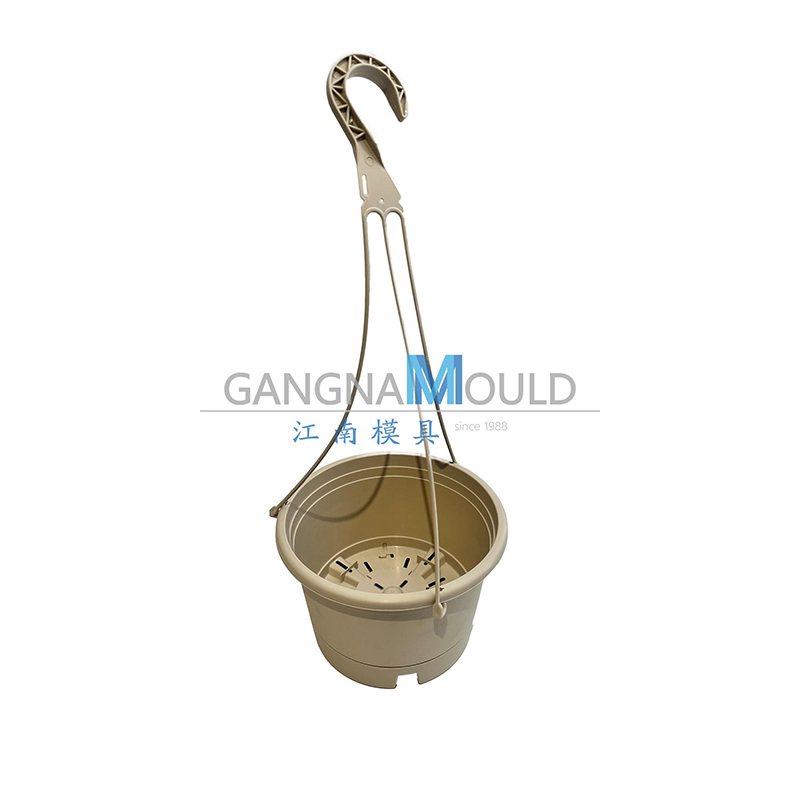
How Does Garden Planter Mould Design Influence Demoulding
2026-10-02
A planter may look simple after it has been removed from a mould, but the shape seen on the finished piece is closely connected with what happens inside the mould during forming and release. The cavity has to provide enough space for the material to take shape while also allowing the finished planter to move away from the mould without unnecessary resistance.
For a Garden Planter Mould, this relationship becomes more noticeable when the pot has deep walls, curved corners, textured surfaces, or openings in the base. A change in one part of the mould can affect another part of the release process. The direction of removal, the shape of the inner cavity, and the way individual mould sections meet all have a role.
Demoulding is therefore not an isolated step at the end of production. It starts with the way the mould is designed. Looking at the main structural factors can help explain why some planter shapes are easier to remove than others and why small design differences can affect the condition of the finished surface and edges.
How Does Mould Taper Influence Planter Demoulding
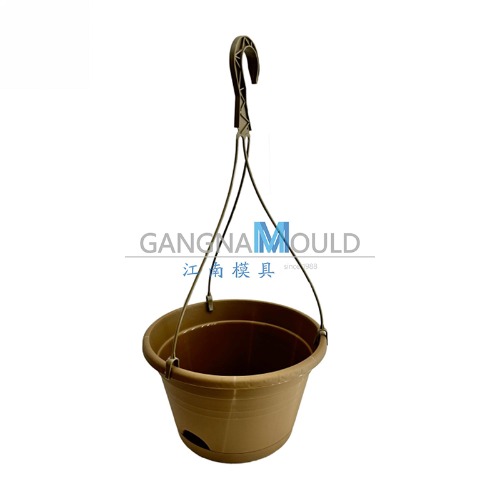
The taper of a mould determines how the planter moves away from the cavity. When the side walls follow a slight outward or inward angle, the finished piece does not have to move against two completely parallel surfaces during removal. This can create a clearer path between the mould and the planter.
A planter with nearly vertical walls may have a different release behavior from one with gently angled sides. The difference is especially noticeable when the mould has a deep cavity. As the planter moves, even a small change in wall direction can alter the amount of contact between the two surfaces.
The taper also needs to follow the intended removal direction. If the cavity changes direction unexpectedly, a section of the finished planter can remain in contact with the mould while another section has already started to move. That uneven movement can place additional pressure around edges or corners.
Several design points are worth considering:
- The side wall should follow a clear removal path.
- Changes in wall angle should be gradual where possible.
- The inner and outer shapes need to work together rather than being designed separately.
- The base should remain stable while the side walls release.
In practical mould design, taper is not simply a matter of changing the appearance of the planter. It influences how the finished piece separates from the cavity.
How Does Planter Depth Affect Mould Release
Depth changes the relationship between the planter and the mould wall. A shallow planter has a relatively short contact area, while a deeper form keeps the side surface inside the cavity for a longer distance. This can make the removal path more sensitive to wall shape and alignment.
Deep planters can also place more attention on the lower part of the cavity. If the side walls narrow toward the bottom, the direction in which the piece is removed becomes particularly important. A small change in the cavity profile may affect how easily the planter moves upward or outward.
The depth of the finished planter also influences how the inner mould section is positioned. A longer inner section may need to remain properly centered so that the wall thickness does not change noticeably from one side to another.
| Mould Feature | Possible Effect During Release |
|---|---|
| Shallow cavity | Shorter contact area between mould and planter |
| Deep cavity | Longer release path and greater sensitivity to alignment |
| Angled side wall | Provides a defined direction for separation |
| Narrow lower section | May increase contact around the base |
| Changing wall profile | Can alter the movement of the finished piece |
For this reason, depth should be considered together with taper rather than treated as a separate dimensional choice. The two features determine much of the path that the planter follows as it leaves the mould.
What Role Does Inner Wall Texture Play in Demoulding
Surface texture changes the way the planter and mould meet. A smooth cavity creates one type of contact, while a textured cavity transfers its pattern to the finished surface and introduces additional surface features along the release path.
Fine texture may not have the same effect as a deep raised pattern. When a pattern has pronounced projections or recessed areas, the material can engage more closely with the mould surface. The release direction then becomes important because the pattern needs to separate without catching against the cavity.
The location of the texture also matters. A pattern that runs across a side wall may behave differently from one that follows the direction of removal. Decorative details around the rim or lower section can require additional attention because these areas may experience movement at a different stage of demoulding.
For Garden Planter Mould applications involving textured surfaces, the relationship between pattern depth, wall direction, and release movement should be considered as one design group. Surface appearance and mould release are not completely separate concerns.
How Does Corner Design Affect Planter Release
Corners concentrate changes in direction. A sharp internal corner creates a different moulding condition from a rounded transition, even when the overall planter dimensions remain similar.
When a planter moves out of the mould, a sharp corner can maintain contact with the cavity along a small area. A rounded corner provides a more gradual transition between adjacent walls. This can influence how material settles into the corner and how the finished piece separates afterward.
Corner design also affects the rim and base. A planter with several changes in direction may have different release behavior at each transition. If the cavity contains narrow spaces near a corner, the material can remain in contact with that area while the surrounding sections begin to move.
Common design considerations include:
- The radius of a rounded corner
- The transition between the side wall and base
- The shape of the upper rim
- The relationship between external and internal corners
- The direction in which each corner leaves the cavity
A consistent corner profile can make the release path easier to define. It can also help maintain a more predictable appearance across repeated moulding operations.
How Does Drainage Hole Design Affect Demoulding
Drainage openings introduce another layer of geometry into the base of a planter. Their shape, position, and surrounding material can influence how the lower part of the mould interacts with the finished piece.
A drainage opening may be formed around a small raised feature within the mould. During removal, the surrounding material has to separate from that feature without damaging the edge of the opening. If the opening is located close to another structural detail, the available space for material and mould movement becomes more limited.
The base also needs enough surrounding material to maintain its intended form. When an opening is placed close to the edge, the distance between the hole and the planter wall can affect how that area behaves during release.
| Drainage Feature | Design Consideration |
|---|---|
| Central opening | Requires clear separation around the forming feature |
| Multiple openings | Needs consistent spacing within the base |
| Opening near an edge | Leaves less material between the hole and wall |
| Small opening | Requires attention to the surrounding mould detail |
| Raised forming feature | Needs a suitable removal direction |
A drainage hole is therefore not only a functional feature of the finished planter. Its geometry becomes part of the mould release process as well.
How Does Mould Alignment Influence Planter Removal
Even when the cavity shape has been carefully designed, the relationship between different mould sections can affect removal. When two or more sections meet, their positions need to remain consistent so that the cavity forms the intended shape.
Misalignment can create an uneven transition along the planter surface. It may also change the amount of material around one side of the piece. During demoulding, such differences can make one section separate earlier than another.
Alignment is particularly relevant when the mould includes an inner form, removable section, or separate base component. Each part needs to meet its corresponding surface without creating an unintended step or obstruction.
A practical alignment check can focus on:
- Whether the mould sections meet evenly.
- Whether the inner cavity remains centered.
- Whether the base sits in its intended position.
- Whether the removal direction remains clear after assembly.
For a Garden Planter Mould, alignment is therefore closely linked to both the finished shape and the movement required to remove it.
How Does Mould Flexibility Affect Release Performance
Not every mould behaves as a completely rigid structure. Some mould materials can flex slightly when pressure is applied during removal. That flexibility can change how the cavity opens around the finished planter.
A flexible section may allow a planter with curved or detailed surfaces to separate more easily when the mould is opened. At the same time, excessive movement can alter the cavity shape during forming. The useful level of flexibility depends on the planter geometry and the way the mould is handled.
Flexibility also changes how corners and textured areas are released. A section that can move away from the planter may reduce direct resistance around a detailed surface. This is different from relying entirely on the shape of the cavity to create a release path.
The design relationship can be viewed simply:
Planter geometry → mould movement → contact change → release path
If the planter has a complicated outer form, the mould may need to accommodate that form through a combination of geometry and controlled movement rather than through wall angles alone.
How Can Mould Design Support Consistent Demoulding
Consistent demoulding depends on several design factors working together. Taper establishes the general movement path, while depth determines how long that path extends. Surface texture, corners, drainage openings, alignment, and flexibility then influence specific areas along the same route.
This means that a change made for one purpose can affect another part of the mould. Increasing texture, for example, may change surface contact. Altering a corner can change the available release space. Moving a drainage opening can affect the surrounding base structure.
A useful design sequence can therefore follow the physical movement of the planter:
- Define the overall cavity shape.
- Establish the intended removal direction.
- Check the relationship between depth and wall angle.
- Review corners and transitions.
- Position drainage features within the base.
- Check the alignment of mould sections.
- Consider how the mould material moves during release.
- Review the complete release path rather than individual features alone.
For Garden Planter Mould design, this approach keeps demoulding connected to the actual geometry of the finished planter. Instead of treating release as a separate production step, the cavity, surface, openings, and mould sections can be considered as parts of one forming process.
Previous Post
No previous article
Next Post
How Can Pallet Mold Design Improve Production Efficiency
Our Products.
Quick Links
Contact Information
- ADD: No. 268, Jinchuan Road, Xinqian Street, Huangyan District, Taizhou City, Zhejiang Province, China
- TEL: +86-(0)576-89191888
- E-MAIL: gm@gangnammould.com
Mobile
Copyright © Zhejiang Huangyan Jiangnan Mould Factory All Rights Reserved.

PP Mould
