


 English
 русский
 Español
 Français
 عربى
عربى 简体中文
简体中文
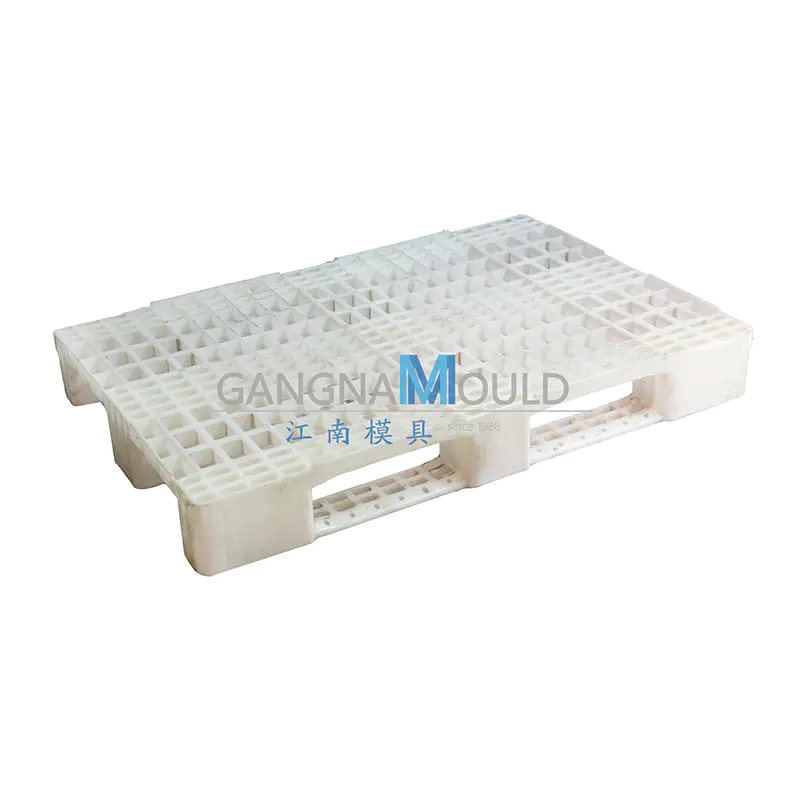
How Do Injection Molded Plastic Pallets Improve Warehouse Flow
2026-08-28
Warehouses keep changing as companies look for simpler ways to move, store, and organize goods without adding chaos to the floor. Manual handling is increasingly getting backed up by automated equipment, including automated guided vehicles, mobile robots, conveyors, and storage systems working side by side with people.
As these systems weave into daily warehouse operations, the pallet stops being just a flat platform for stacking boxes. Its shape, stability, surface condition, and consistency can shape how smoothly goods actually move through the different stages of an automated process.
Injection Molded Plastic Pallets are drawing attention in this setting because their production method lets manufacturers turn out repeatable pallet structures that fit into organized handling environments without much guesswork. The link between pallets and automation is easy to overlook at first glance.
A warehouse might have sophisticated moving equipment humming along, but every load still needs a reliable physical base that can be picked up, transported, positioned, stored, and retrieved without a hitch. That reality pulls pallet design squarely into the wider logistics conversation.
Why Are Pallets Important in Automated Warehousing?
Automation runs on predictable movement more than anything else. An AGV or AMR needs to approach a load in a controlled way, while a conveyor needs the pallet to travel through its designated path without unnecessary disruption along the way.
Storage equipment also depends on the load staying properly positioned rather than shifting mid-transit. A pallet, because of all this, becomes part of the operating environment rather than sitting there as a passive container waiting to be used.
| Warehouse Activity | Pallet Role |
|---|---|
| Automated transport | Provides a stable load platform |
| Conveyor movement | Supports consistent product transfer |
| Robotic handling | Creates a recognizable handling base |
| Storage | Keeps goods organized |
| Order preparation | Supports movement between work areas |
When pallets vary noticeably in shape or condition across a facility, automated equipment can struggle to handle different loads in a consistent way. A damaged pallet can also cause problems that ripple out well beyond the pallet itself.
Goods can become unstable, movement may need to pause, and workers sometimes have to step in and intervene manually. That's why warehouse operators often weigh pallet consistency when planning out automated workflows from the start.
The goal isn't simply picking any plastic pallet off a list. The pallet needs to genuinely fit the way goods actually move through the facility day to day.
How Does Injection Molding Support Pallet Consistency?
The production process shapes how a pallet behaves from one unit to the next on the warehouse floor. Injection molding lets plastic material get formed inside a mold, creating a defined structure that can be reproduced across production runs with real consistency.
That's useful for warehouse applications where pallets get handled by equipment over and over, day after day. A consistent structure makes it easier for automated systems to interact with the pallet in a predictable way rather than adjusting for surprises each time.
| Design Area | Automation Consideration |
|---|---|
| Overall shape | Supports repeatable handling |
| Base structure | Helps maintain stable contact |
| Load surface | Provides an organized platform |
| Fork entry areas | Supports mechanical handling |
| Edges | Can influence conveyor movement |
| Underside structure | Affects equipment access |
Consistency doesn't mean one pallet has to serve every single application under the sun. Different warehouses carry different storage arrangements, handling equipment, and product types under their roofs.
The more useful approach is matching the pallet structure with the intended workflow it's actually going into. Manufacturers can also refine mold design around common handling needs seen across the industry. That gives buyers more genuine options when selecting pallets built for automated facilities.
How Do Plastic Pallets Fit AGV and AMR Operations?
AGVs and AMRs are built to move materials around a warehouse with less manual intervention needed from staff. They may transport pallets between storage areas, production zones, packing stations, and dispatch points throughout a shift.
The pallet needs to cooperate with that movement rather than fight it. A suitable pallet provides a stable base that lets automated equipment engage with the load as part of a planned route without hesitation.
| Automated Equipment | Pallet Requirement |
|---|---|
| AGV | Stable positioning during movement |
| AMR | Compatible load placement |
| Conveyor | Suitable contact with conveying surfaces |
| Automated storage system | Consistent handling shape |
| Robotic station | Predictable pallet presentation |
This relationship isn't limited to just the vehicle carrying the load. The pallet may pass through several pieces of equipment during a single warehouse cycle, one after another.
A pallet picked up by an AMR may later land on a conveyor and then move into a storage area entirely. If its structure works smoothly across all these stages, the overall process becomes easier to coordinate without friction. This is part of why automated warehousing tends to encourage closer attention to pallet design generally. The pallet needs to function within a system, not sit off to the side as an isolated product.
What Role Does Pallet Size Consistency Play in Conveying Systems?
Conveyors depend on orderly movement to keep things running smoothly. Pallets travel along designated paths and may stop at specific working positions for scanning, picking, packing, or transfer along the way.
Consistent pallet dimensions help maintain a more predictable relationship between the pallet and the conveying equipment carrying it. That matters especially when multiple pallets move through the same stretch of conveyor at roughly the same time.
| Conveying Stage | Importance of Consistency |
|---|---|
| Pallet entry | Helps establish a predictable position |
| Continuous movement | Supports orderly transport |
| Transfer point | Helps equipment handle the load |
| Stop position | Supports repeatable placement |
| Pallet exit | Makes transfer easier to manage |
Size consistency also helps warehouse planners make better use of available space. Storage locations can get designed around the expected pallet format instead of constantly adjusting for different shapes showing up unpredictably.
That tends to simplify the relationship between storage and transport across the whole facility. For Injection Molded Plastic Pallets, repeatable manufacturing can support this kind of standardized warehouse environment fairly naturally. The practical value comes down to how well the pallet actually fits the system it's placed into.
A pallet that works well with one conveyor arrangement won't automatically suit another setup down the road, so buyers still need to assess the complete application rather than assume one size fits all.
How Does Structural Design Affect Automated Handling?
A pallet's structure determines how it interacts with lifting and transport equipment throughout the day. The upper surface needs to support the goods resting on it, while the lower structure creates space for handling equipment and shapes how the pallet sits on a surface underneath.
The two areas need to work together rather than being designed in isolation from each other. A well-thought-out structure makes loading, lifting, movement, and placement easier to coordinate across the board.
| Structural Feature | Handling Consideration |
|---|---|
| Load surface | Supports product placement |
| Support sections | Help distribute the load |
| Entry spaces | Allow handling equipment to approach |
| Reinforced areas | Support repeated handling |
| Base arrangement | Influences stability during movement |
The structure also needs to suit whatever products are actually being transported on it. A pallet used for packaged food can carry different cleaning and handling requirements than one used for industrial components sitting in a factory.
A warehouse storing boxed goods may also have different needs than a facility moving containers or assembled products around. All of this makes structural design a matter of application rather than a fixed template. Manufacturers can develop different pallet structures for different logistics environments instead of leaning on one general-purpose design for everything.
For automated warehouses, the key concern boils down to whether the structure supports reliable interaction with whatever equipment is already in use on the floor.
Can Injection Molded Plastic Pallets Support Intelligent Logistics Workflows?
Intelligent logistics involves more than just moving goods automatically from point A to point B. Warehouses may connect storage, transportation, order handling, inventory management, and information systems into one coordinated workflow running behind the scenes.
The physical pallet still plays a real role in all this because it carries the goods between each of these stages. A consistent pallet format can make physical handling easier to organize within a broader logistics system without extra friction.
| Logistics Function | Pallet Contribution |
|---|---|
| Storage | Provides a repeatable load base |
| Internal transport | Supports movement between zones |
| Sorting | Helps maintain organized loads |
| Order handling | Supports product grouping |
| Dispatch | Provides a stable transport platform |
The pallet can also become part of a warehouse's daily handling routine over time. Workers and automated equipment can follow established procedures for loading, moving, and storing the same type of pallet consistently.
That tends to cut down on unnecessary variation in everyday operations that would otherwise slow things down. Plastic construction may also offer practical benefits for facilities that need pallets cleaned or reused repeatedly rather than discarded. How suitable a particular plastic pallet actually is still depends on the intended environment and the care practices in place at that facility.
Warehouse operators should think through the pallet's complete lifecycle rather than looking only at its initial handling function on day one.
How Can Pallet Design Improve Adaptation to Automated Storage Systems?
Automated storage systems often operate within carefully organized physical spaces where every inch matters. Storage locations, transport paths, lifting equipment, and retrieval systems all need to interact without unnecessary interference between them.
The pallet becomes an important connection point between the stored product and the equipment handling it. A suitable design helps maintain a stable relationship between the load and its storage position throughout the process.
| Storage Consideration | Pallet Design Focus |
|---|---|
| Load placement | Stable product positioning |
| Retrieval | Predictable handling |
| Storage location | Consistent pallet footprint |
| Equipment access | Suitable lower structure |
| Repeated circulation | Appropriate construction for regular handling |
This matters especially when pallets move repeatedly between storage and other warehouse zones throughout a typical day. A pallet may enter storage, leave for order preparation, return to a different location, and later move toward dispatch entirely.
Its design needs to support all these repeated transitions without wearing down quickly. Injection Molded Plastic Pallets can be developed with repeatable structural features suited to this kind of circulation across a facility. How suitable it actually turns out to be depends on the storage system, load type, handling equipment, and operating environment involved.
Good pallet selection, in that sense, starts with understanding the warehouse process itself rather than picking a pallet based only on material.
What Should Warehouse Operators Consider When Selecting Plastic Pallets?
Selecting pallets for automation calls for a broader view than picking pallets for simple manual storage. Operators need to think through how the pallet will actually move through the facility and which pieces of equipment will interact with it along the way.
The pallet should also fit the type of products being handled and the way goods get stored across the warehouse.
A practical assessment can include:
- Handling method
Identify whether pallets will be moved by workers, AGVs, AMRs, conveyors, lifting equipment, or some combination of these systems together.
- Storage arrangement
Consider how pallets will enter, remain in, and eventually leave storage locations throughout their use.
- Load characteristics
Review the shape, weight distribution, and handling needs of the goods that will sit on the pallet.
- Movement frequency
Consider whether the pallets will circulate repeatedly through the facility or stay largely in one fixed area.
- Cleaning and maintenance
Check whether the material and structure suit the cleaning practices already in place at the facility.
- System compatibility
Confirm that the pallet can actually interact with existing warehouse equipment and procedures rather than requiring workarounds.
This kind of assessment can also help buyers communicate with pallet manufacturers a lot more effectively. Instead of simply requesting a plastic pallet off a generic list, they can describe the warehouse environment and the equipment involved in detail.
That information gives the manufacturer a much clearer basis for discussing suitable structural options together. For facilities expanding their automation, pallet selection can become a real part of the equipment planning process rather than an afterthought tacked on later. The physical design of the pallet needs to match the movement logic of the warehouse it's entering.
How Are Plastic Pallets Being Integrated Into Changing Warehouse Workflows?
Warehouse operations keep blending manual work with automated equipment rather than picking one or the other outright. A facility may rely on people for picking and inspection while leaning on mobile robots for internal transport across the floor.
Another operation may connect conveyors, automated storage, robotic handling, and packing stations into a more integrated process running end to end. This creates demand for pallets that can move between different stages without requiring constant adjustment along the way.
| Warehouse Model | Pallet Application |
|---|---|
| Mixed manual and automated | Supports transitions between workers and equipment |
| Automated transport | Provides a repeatable load base |
| Conveyor-based movement | Supports organized product transfer |
| Automated storage | Fits planned storage and retrieval |
| Distribution operations | Supports movement toward dispatch |
The pallet also needs to stay practical as the warehouse itself keeps changing over time. Equipment may get added later on down the road.
Storage areas may get reorganized as needs shift. Product types may change entirely as the business grows. A pallet chosen with the broader workflow in mind tends to be easier to fold into these adjustments without starting from scratch.
For manufacturers, this opens up a chance to think about pallets as part of the wider logistics environment rather than a standalone product. The conversation is moving beyond material choice alone toward structural design, handling compatibility, product movement, and how pallets actually interact with automated warehousing equipment on the ground.
Previous Post
How Can a Plastic Injection Mold Maker Improve Pallet Quality
Next Post
What Makes a Pallet Mold Suitable for Automated Warehousing
Our Products.
Quick Links
Contact Information
- ADD: No. 268, Jinchuan Road, Xinqian Street, Huangyan District, Taizhou City, Zhejiang Province, China
- TEL: +86-(0)576-89191888
- E-MAIL: gm@gangnammould.com
Mobile
Copyright © Zhejiang Huangyan Jiangnan Mould Factory All Rights Reserved.

PP Mould
