


 English
 русский
 Español
 Français
 عربى
عربى 简体中文
简体中文
How Can a Plastic Injection Mold Maker Improve Pallet Quality
2026-09-04
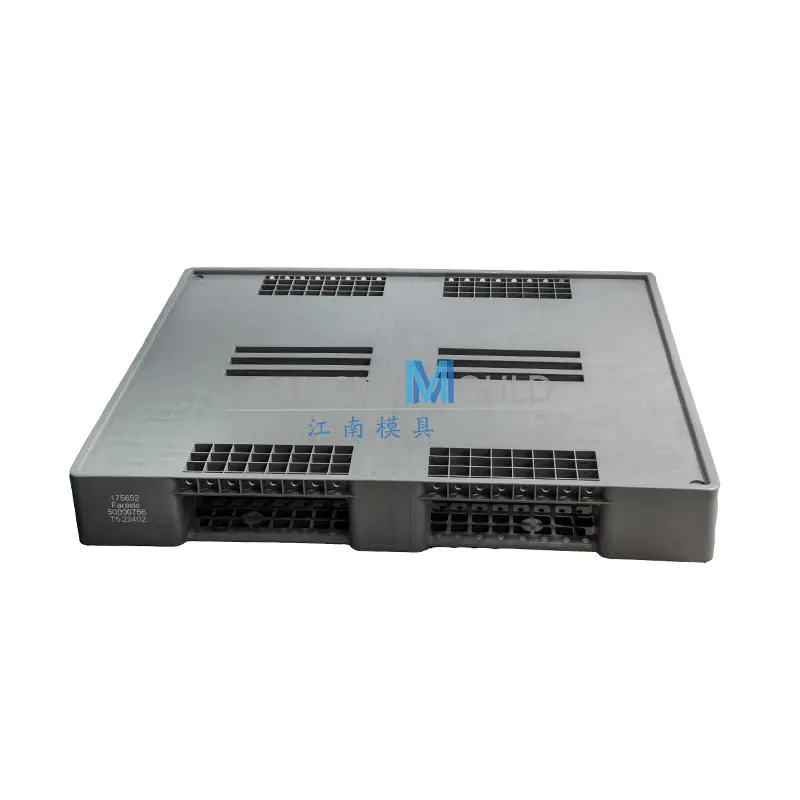
High-volume pallet production places constant pressure on manufacturers to keep production moving while maintaining consistent product quality from one batch to the next. A Plastic Injection Mold Maker plays a genuinely important role in this process, since the mold influences how efficiently a pallet can be produced, how consistently each piece is formed, and how easily production teams can manage repeated orders coming through the door.
Plastic pallets are used across logistics, warehousing, manufacturing, agriculture, retail, and material handling, so production requirements can vary quite a bit between applications. A pallet may need to support repeated handling, stacking, storage, transportation, or movement through different working environments over its lifetime.
For manufacturers, the challenge isn't simply creating a mold that produces one acceptable pallet off the line. It's developing a production system that remains practical as order volume climbs and deadlines tighten. Mold structure, material selection, production planning, maintenance, inspection, and communication with the buyer all contribute to this whole process working smoothly.
Why Does Mold Development Matter in High-Volume Pallet Production?
Mold development creates the foundation for repeated pallet production, since the mold determines how the pallet shape gets formed during each production cycle. A poorly planned mold can make later production a lot more difficult, even when the pallet design itself appears fairly straightforward on paper.
The development process should begin with a clear understanding of the pallet's intended use and overall structure before any steel gets cut. Manufacturers may need to consider whether the pallet is intended for warehouse storage, transport, industrial handling, export packaging, or another application entirely.
Important design considerations can include several areas worth reviewing early.
| Mold Development Area | Production Relevance |
|---|---|
| Pallet structure | Influences the overall forming process |
| Surface design | Affects appearance and product handling |
| Support areas | Relates to the pallet's intended use |
| Mold construction | Influences repeated production |
| Part removal | Helps maintain a practical production flow |
| Maintenance access | Makes later servicing easier |
A mold should get developed with repeated production in mind, rather than treated as a one-time manufacturing tool that only needs to work once. This approach allows manufacturers to consider how the mold will behave throughout an extended production program stretching over months or years.
It also gives the buyer an opportunity to identify important product requirements before mold construction ever begins. Clear communication at this stage can reduce unnecessary changes once production is already underway and money's been spent.
How Can a Plastic Injection Mold Maker Prepare a Mold for Mass Production?
Mass production requires a lot more than simply increasing the number of production orders on a schedule. The mold needs to support a repeatable manufacturing process in which each production cycle follows a similar pattern shift after shift.
A Plastic Injection Mold Maker can support this goal by reviewing the pallet structure, mold layout, production workflow, and expected order pattern before the mold ever gets completed. The design should also consider how operators will handle the mold during production and maintenance, not just how it performs in a first test shot.
A practical development process may involve several stages worth walking through in order.
- Review the pallet design and intended application.
- Examine the expected production requirements.
- Develop the mold structure around the product design.
- Check how the mold will operate within the production process.
- Review access for cleaning and maintenance.
- Confirm the production requirements with the buyer.
Each stage provides an opportunity to catch potential production concerns before they turn into real delays. This proves especially useful for large pallet orders, since small design issues may become a lot more noticeable when the same mold gets used repeatedly across thousands of cycles.
Mass production also places greater importance on consistency across every run. The mold should support stable production conditions, so operators aren't required to make frequent adjustments simply to maintain the intended pallet shape shift after shift.
What Role Does Production Consistency Play in Pallet Manufacturing?
Production consistency matters because buyers usually expect pallets within the same order to follow the agreed design and appearance from the first piece to the last. Differences between individual products can make handling, stacking, storage, or customer inspection a lot more difficult down the line.
Consistency can involve several aspects of the finished pallet worth checking regularly.
| Consistency Area | What Manufacturers May Review |
|---|---|
| Shape | Whether the pallet follows the intended design |
| Surface | Whether visible areas remain reasonably uniform |
| Structure | Whether important sections form as expected |
| Edges | Whether edges maintain the intended appearance |
| Openings | Whether designed spaces remain consistent |
| Assembly features | Whether connected parts fit as intended |
The mold itself is a genuinely important part of maintaining this consistency across a run. That said, production consistency doesn't depend on the mold alone sitting in the press. Material handling, machine operation, production conditions, inspection practices, and operator procedures can also influence the finished product coming off the line.
For this reason, a mold supplier and pallet manufacturer need to understand where responsibility actually lies across the complete production process. A well-organized workflow can make it a lot easier to identify whether a variation comes from the mold, production process, material, or handling stage. This can save real time when adjustments are needed on short notice.
How Should Mold Design Respond to Different Pallet Orders?
Not every pallet order has the same requirements, even when two buyers both just say they need "pallets." Some buyers may need pallets for general warehouse use, while others may require designs suited to specific handling or storage situations unique to their operation.
The order may also involve different pallet sizes, structures, surfaces, entry arrangements, or branding requirements depending on the customer. A mold maker therefore needs to understand the actual product, rather than relying only on the word "pallet" as a general category on a purchase order.
Order information can include a handful of details worth gathering upfront.
- Intended application
- Pallet structure
- Material preference
- Surface requirements
- Production quantity
- Delivery expectations
- Packaging needs
- Inspection requirements
Clear order information helps the mold development process remain aligned with the actual production goal from start to finish. It can also prevent unnecessary mold changes caused by missing product details that only surface once tooling's already cut.
For manufacturers handling recurring orders, it may help to maintain clear production records for each pallet design going forward. This gives production teams a reference when the same product needs manufacturing again months later. A stable relationship between product drawings, mold information, production instructions, and inspection requirements can make repeated orders a lot easier to organize on the floor.
Why Is Mold Maintenance Important During Long Production Runs?
Repeated production places continuous demands on a mold, making maintenance a genuinely important part of high-volume manufacturing over the long haul. Even when a mold gets designed for repeated use, regular inspection helps production teams identify changes before they interfere with normal manufacturing.
Maintenance can involve cleaning, inspection, lubrication where appropriate, checking moving sections, and reviewing areas that experience repeated contact shift after shift. The exact maintenance routine depends on the mold structure and production environment it's running in.
A practical maintenance plan may include several activities worth scheduling.
| Maintenance Activity | Purpose |
|---|---|
| Surface cleaning | Removes accumulated production residue |
| Component inspection | Identifies visible changes or wear |
| Moving-part checks | Helps maintain normal movement |
| Connection checks | Helps identify loose or damaged areas |
| Storage care | Protects the mold between production periods |
| Maintenance records | Provides a reference for future servicing |
Regular maintenance can also help manufacturers understand how the mold changes over time as cycles add up. A production team that records maintenance observations may notice recurring issues and address them before they turn into larger production interruptions on the floor.
The Plastic Injection Mold Maker can support this process by providing practical information about mold structure, maintenance access, and recommended care procedures from the start. Good communication proves particularly useful when the mold gets used by a production team that didn't participate in its original development months or years earlier.
How Can a Plastic Injection Mold Maker Help Manage Production Efficiency?
High-volume production requires a smooth relationship between mold operation and the wider manufacturing workflow surrounding it. A mold that's difficult to handle, inspect, clean, or maintain can create unnecessary interruptions during production that ripple through a whole shift.
The mold maker can therefore consider production handling right during the development stage, not as an afterthought. This may include access to important areas, ease of inspection, replacement of serviceable components, and practical maintenance procedures built into the design.
Production teams also need to think about how the mold fits into their daily workflow on the floor. Workers, for example, may need to move between production, inspection, cleaning, storage, and maintenance areas throughout a shift. A clear workflow reduces unnecessary movement and makes responsibilities a lot easier to understand for everyone involved.
The goal isn't simply making the mold more complicated for its own sake. A straightforward structure can often make routine production a lot easier to manage, since operators can understand how the mold should get handled without a manual in hand. This proves especially relevant for pallet manufacturers producing different designs for multiple customers at once. Each product may require its own mold information and production instructions, so organization becomes increasingly important as the product range grows across a facility.
How Does Material Selection Affect High-Volume Pallet Production?
Plastic material is another genuinely important consideration, since different pallet applications may require different material characteristics to hold up over time. The selected material can influence the way the pallet is formed, handled, stored, and used after production leaves the factory.
Manufacturers should therefore discuss material requirements with both the pallet buyer and the mold maker before production ever begins. The mold should get developed with the intended material in mind, rather than treating material selection as some separate decision made later.
Different applications may place different demands on the finished pallet out in the field.
| Application | Material Consideration |
|---|---|
| Warehouse handling | Repeated everyday use |
| Outdoor storage | Exposure to surrounding conditions |
| Industrial use | Frequent movement and handling |
| Export packaging | Transport and storage requirements |
| Agricultural use | Working environment and cleaning needs |
Material selection can also affect production planning quite a bit down the line. A manufacturer may need to consider how the chosen material behaves during repeated production and whether the production process is organized around that material's particular quirks. This is another reason early communication between the pallet manufacturer and Plastic Injection Mold Maker can prove valuable before tooling starts. The mold, material, production process, and final application should get considered as connected parts of the same project, not separate decisions made in silos.
What Should Buyers Discuss With a Plastic Injection Mold Maker Before Ordering?
Buyers can make mold development a lot easier by providing clear information before production begins. The more clearly the product requirements get understood upfront, the easier it becomes for the mold maker to develop a structure that fits the intended manufacturing process from day one.
A buyer may want to discuss several areas worth covering in an early meeting.
- Pallet application.
- Product design.
- Material requirements.
- Expected order pattern.
- Production frequency.
- Inspection expectations.
- Maintenance arrangements.
- Future product changes.
The expected order pattern deserves particular attention in this conversation. A mold intended for occasional production may get managed quite differently from one that will support repeated high-volume orders stretching over years.
Recurring orders can also influence decisions about maintenance planning, spare components, mold storage, and production records kept on file. Buyers should also explain whether the same pallet design may need production for different customers or markets down the road. This information can help the mold maker understand whether flexibility will matter during future production runs. Clear communication doesn't mean every project needs a complicated specification document. It means the important requirements get identified before decisions become difficult to change later.
How Can Mold Makers Support Different Stages of the Pallet Production Process?
A mold maker's role can extend well beyond the initial mold design phase. The development stage establishes the structure, while later communication can help manufacturers manage production, maintenance, and future adjustments as the relationship continues.
This creates a genuinely longer relationship between the mold maker and pallet producer than a single transaction. During mold development, attention can focus on product requirements and manufacturing suitability. During production preparation, teams can review mold handling and maintenance procedures together. During repeated manufacturing, production feedback can help identify areas that may need inspection or adjustment down the road.
| Production Stage | Mold Maker Support |
|---|---|
| Product planning | Reviews pallet design requirements |
| Mold development | Builds the mold around the intended product |
| Production preparation | Supports installation and handling information |
| Mass production | Helps address mold-related production concerns |
| Maintenance | Provides structure and care information |
| Future orders | Supports repeat production planning |
This approach can prove useful when a pallet manufacturer expects the same product to remain in production for an extended period spanning multiple years. It also helps create a clearer connection between product development and factory operations on the ground. A mold should get treated as part of the production system, rather than as some isolated piece of equipment sitting in a corner.
How Can High-Volume Pallet Manufacturers Prepare for Future Orders?
High-volume production rarely involves only one shipment or one production cycle from start to finish. A successful manufacturing arrangement often needs to remain useful when the buyer places another order months or years later.
Manufacturers can prepare by keeping product drawings, mold records, maintenance notes, inspection information, and production instructions organized in one accessible place. This information creates a genuine reference for future manufacturing runs.
If a product needs a small design change, clear records can also make it a lot easier to understand what's already been established before revisiting the tooling. The relationship between the pallet manufacturer and mold supplier can become especially important as product requirements evolve over time.
A Plastic Injection Mold Maker that understands the production background may be a lot better positioned to discuss practical mold adjustments with the buyer when changes come up. Future planning can also include mold storage between runs. A mold that isn't currently being used still needs suitable handling and protection, so it remains available when production resumes down the road.
Clear identification and organized storage can reduce confusion when several molds are kept at the same facility side by side. For manufacturers managing multiple pallet products, this level of organization can help separate different product requirements and reduce unnecessary production delays. High-volume pallet production therefore depends on a lot more than production capacity alone, because mold development, consistent forming, maintenance routines, order communication, material selection, and future planning all influence how smoothly a pallet program can operate over the long run.
Previous Post
How Can Plastic Pallet Mold Design Improve Consistency
Next Post
How Do Injection Molded Plastic Pallets Improve Warehouse Flow
Our Products.
Quick Links
Contact Information
- ADD: No. 268, Jinchuan Road, Xinqian Street, Huangyan District, Taizhou City, Zhejiang Province, China
- TEL: +86-(0)576-89191888
- E-MAIL: gm@gangnammould.com
Mobile
Copyright © Zhejiang Huangyan Jiangnan Mould Factory All Rights Reserved.

PP Mould
