


 English
 русский
 Español
 Français
 عربى
 简体中文

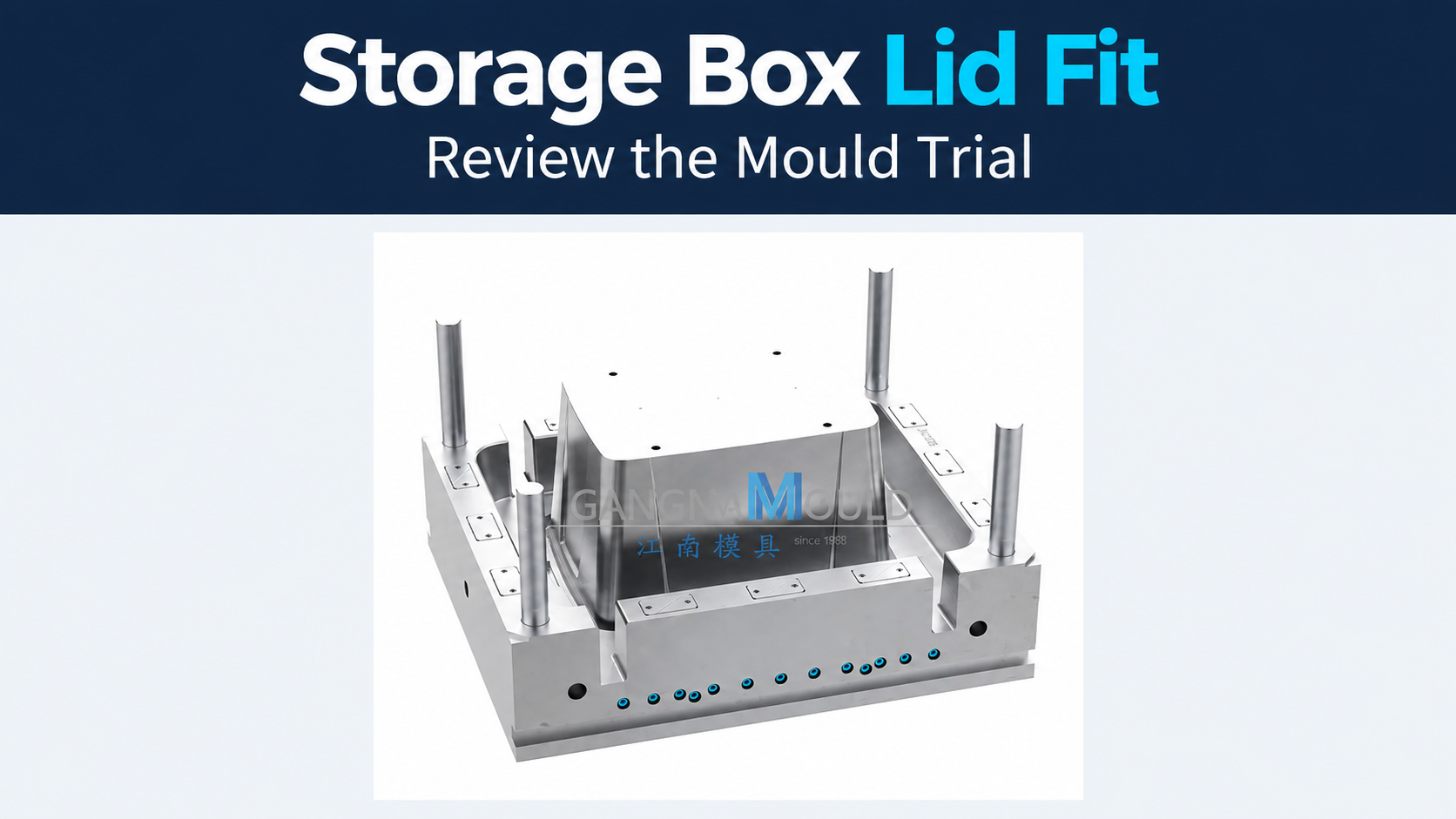
Will the Storage Box Lid Fit After Moulding and Cooling?
2026-11-06
A storage box and its lid can each meet an isolated dimension and still make an awkward pair. The lid may catch at one corner, sit unevenly along a long edge or require more force than the intended user expects. Tool acceptance therefore needs an assembly review as well as separate component measurements.
For an injection mould buyer, lid fit is a coordinated development question. Part geometry, material selection, moulding conditions and cooling state all contribute to the observed result. A single warm sample pressed together beside the machine is an incomplete basis for approving a product that will later be packed, stored and used as an assembly.
Define the intended closing action
The storage box mould range illustrates the relevant product category. Before discussing a tolerance, define what the finished box should do. Is the lid a loose cover, a locating cover or a more positive closing arrangement? Which edges are expected to locate first, and which surfaces should remain visually aligned when the lid is closed?
Identify the mating box and lid revisions together. If an existing component must be retained, provide representative samples and drawings, including known variation. A new lid designed around one unusually tight or loose sample can give misleading confidence. The toolmaker needs the intended production reference rather than an unexplained physical part.
Describe acceptance in observable terms. The user should know the agreed closing sequence, the permitted gap and the intended appearance. Where a force measurement is necessary, agree its method and conditions. Avoid replacing a useful criterion with subjective wording such as perfect fit or easy to close, which different inspectors may interpret differently.
Measure features that control the assembly
Overall length and width do not describe every locating feature. The rim profile, corner geometry, local wall sections and any engagement details may be more relevant to closing behaviour. Mark the functional dimensions on the drawing and explain how they relate to the mating component.
The parts should be measured in an agreed condition. Warm moulded plastic can behave differently from a part that has cooled and stabilised. Resin choice, conditioning and storage can also affect the comparison. The appropriate review period depends on the actual material and application; do not insert a universal waiting time into every mould acceptance plan.
| Review point | What to record | Assembly implication |
|---|---|---|
| Mating revision | Box and lid drawing identifiers | Prevents mixed design versions |
| Rim dimensions | Functional measurement locations | Describes the locating interface |
| Cooling condition | Time and environment before review | Makes trial results comparable |
| Closing action | Agreed sequence and observation method | Captures practical use |
| Edge appearance | Gap and alignment criteria | Separates fit from cosmetic judgement |
Treat distortion as an assembly observation
A long wall or lid panel may move as the moulded part cools. Observing only one side of the assembly can miss a corner that lifts or an edge that bows. Review the complete perimeter on a suitable reference surface, with the parts free from unintended restraint.
Do not assume that adding force to the closing step resolves the cause. The team should consider the measured geometry, moulding record and cooling arrangement before deciding whether the part, process or tool needs adjustment. A sample forced into place may hide an issue that returns when the customer opens it again.
Similarly, a successful assembly does not establish a leakproof or airtight claim. Those are separate functional requirements with their own designs and verification methods. If the product is intended only as a storage box with a cover, keep the acceptance language within that scope instead of adding an unsupported sealing promise.
Build an informative mould trial
Ask the toolmaker to retain the relevant moulding conditions with the sample set. Record the material grade, colour formulation where relevant, machine identification and the conditions agreed as significant for that trial. Samples without a process record can be difficult to compare after a later adjustment.
When multiple cavities are involved, identify cavity origin on the samples or their accompanying record. Check the planned interchangeability between boxes and lids rather than repeatedly assembling the same selected pair. The agreed sampling plan should reflect the production arrangement and intended interchangeability without implying that a few handpicked assemblies represent the whole output.
- Keep box and lid revision identifiers together.
- Record cooling and conditioning before measurement.
- Review the perimeter rather than a single attractive viewing angle.
- Preserve sample identity through any tool adjustment.
- Separate closing fit, cosmetic appearance and any sealing requirement.
A trial report should state what changed between rounds. If the toolmaker modifies a rim feature, the next review should return to the relevant dimensions and assembly checks. Keep earlier samples clearly distinguished so that a mixed sample set does not make the change appear more consistent than it is.
Approve a pair of records, not one favourable sample
The acceptance package should connect the drawings, material, trial conditions and finished assembly criteria. Both purchasing and quality teams need access to that package. A retained sample is valuable as a visual reference, but it should support the written criteria rather than replace them.
If the intended resin or colour changes after approval, review whether the previous fit evidence remains applicable. If the receiving factory will use a different moulding arrangement, agree how the transfer trial will confirm the assembly. These steps keep mould acceptance connected to the conditions under which the product will actually be made.
For storage box mould projects, lid fit is best treated as a relationship between two components over a defined review process. Clear mating references and comparable trial records give the engineering team a useful basis for adjustment and give the buyer a more reliable basis for approving the tool.
Previous Post
No previous article
Next Post
Where Should Ejector Marks Be Allowed on a Storage Box?
Our Products.
Quick Links
Contact Information
- ADD: No. 268, Jinchuan Road, Xinqian Street, Huangyan District, Taizhou City, Zhejiang Province, China
- TEL: +86-(0)576-89191888
- E-MAIL: gm@gangnammould.com
Mobile
Copyright © Zhejiang Huangyan Jiangnan Mould Factory All Rights Reserved.

PP Mould
