


 English
 русский
 Español
 Français
 عربى
عربى 简体中文
简体中文
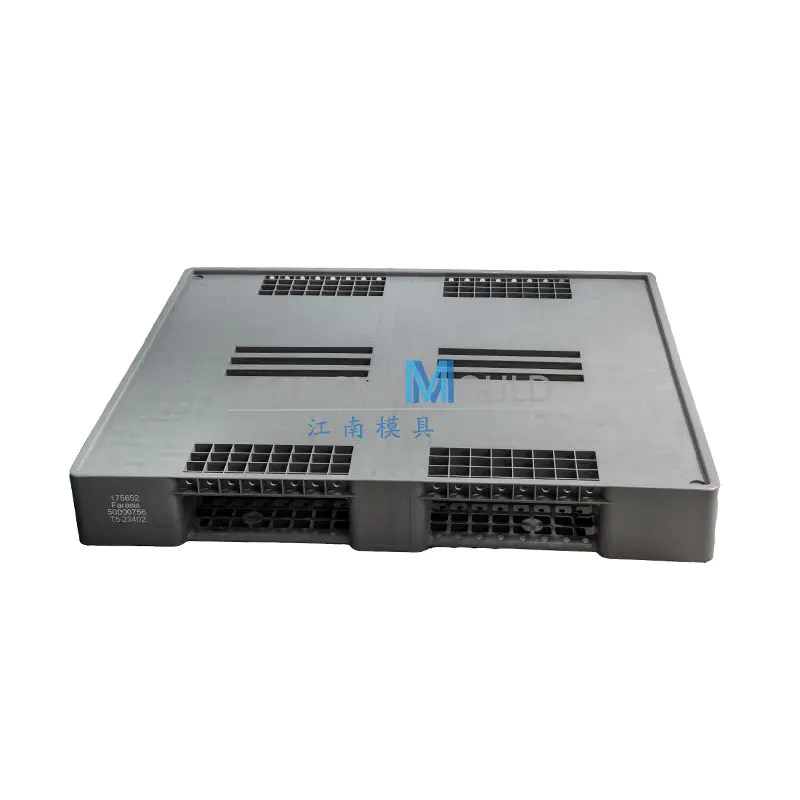
How Do Moulded Pallets Address Challenges in Modern Supply Chains?
2026-08-07
Walk through any distribution warehouse and the floor is covered in flat, stacked platforms holding boxes several feet high, waiting for a forklift to move them onto a truck. Nobody spends much time thinking about the pallet itself, but that plain-looking platform determines whether goods arrive intact or show up cracked and shifted after a long haul. Moulded Pallets have become a common answer to that problem, built as a single molded piece rather than assembled from separate boards, which changes how they hold up under repeated handling.
Wooden pallets used to be the default without much question. That's shifting as businesses run into the practical limits of wood — splinters, uneven boards, nails working loose — especially as shipping volumes climb and handling gets rougher along the way.
Why Supply Chains Keep Running Into New Problems
Goods don't move in a straight line from a factory to a store shelf anymore. They pass through distribution centers, get repackaged, sit in storage, then move again, sometimes across several different transportation methods before reaching a final destination.
A few pressures keep building up:
- More product variety means warehouses juggle a wider mix of shapes and weights on the same floor
- Faster delivery expectations put pressure on every handling step, including how quickly pallets get loaded and moved
- Storage space costs money, so businesses want equipment that doesn't waste room unnecessarily
- Damaged goods during transit cost more than just the product itself, once returns and reshipping get factored in
None of these problems are new exactly, but they've compounded as supply chains stretch across more steps and more distance than they used to.
What Sets a Moulded Pallet Apart
A traditional wooden pallet gets built from separate boards nailed or screwed together, which means weak points show up wherever those joints sit. A moulded pallet, usually made from plastic through an injection or compression process, comes out as one continuous piece without those seams.
| Feature | Practical Effect |
|---|---|
| Single-piece construction | Removes the weak joints found in nailed wood pallets |
| Smooth surface | Avoids splinters or protruding nails that damage goods |
| Consistent shape | Every pallet in a batch behaves the same way under load |
| Resistance to moisture | Doesn't warp or rot the way wood can after repeated exposure |
A warehouse stacking boxes of packaged food, for instance, benefits from a pallet surface that won't snag shrink wrap or leave splinters near products meant for a grocery shelf.
How This Changes Day-to-Day Handling
Every time a pallet gets lifted, moved, and set back down, something is testing whether that pallet holds its shape and keeps the load stable. A pallet that flexes unevenly or has a board start to give makes that whole process riskier.
Moulded Pallets tend to support:
- Smoother forklift handling, since the shape stays consistent across every pallet in a stack
- Easier stacking in a warehouse, since uniform dimensions mean less guesswork when building a load
- Fewer mid-shift problems like a cracked board or a loose nail catching on shrink wrap
- More predictable behavior when loads shift slightly during transport
A distribution center running multiple shifts a day notices this mostly through what doesn't happen — fewer damaged pallets pulled off the line, fewer delays from a forklift operator dealing with an unstable stack.
Why Storage Space Keeps Getting Tighter
Warehouse space isn't expanding at the same rate that inventory is. Businesses are trying to fit more product movement into roughly the same square footage they had before, which puts pressure on every piece of equipment taking up floor space, pallets included.
| Storage Concern | How Pallet Choice Plays In |
|---|---|
| Organizing mixed inventory | Consistent pallet sizing simplifies shelving and stacking |
| Making the most of vertical space | Uniform pallets stack more predictably without shifting |
| Moving inventory quickly | Standardized shapes speed up loading and retrieval |
| Adjusting to seasonal inventory swings | Reusable pallets handle changing volume without added cost |
A retailer managing seasonal stock swings, busier around holidays and slower other times of year, benefits from pallets that hold up through repeated reuse rather than needing frequent replacement.
How the Same Pallet Works Across Different Industries
A food distributor, a furniture manufacturer, and an electronics warehouse all move products that behave very differently under load, yet all three might reasonably use a similar moulded pallet design with adjustments in size or weight capacity.
| Industry | What the Pallet Needs to Handle |
|---|---|
| Food distribution | Surfaces that meet hygiene standards and resist moisture |
| Manufacturing | Weight capacity for heavier, denser products |
| Retail distribution | Consistent sizing that fits standard shelving and truck loads |
| General warehousing | Durability across repeated loading and unloading cycles |
A bottling company moving cases of beverages and a hardware supplier moving boxed tools end up drawing from a similar category of pallet, just adjusted for weight and surface requirements specific to what they're shipping.
Where Sustainability Enters Pallet Decisions
Pallets get used repeatedly, then eventually discarded or replaced, and businesses are paying closer attention to what happens across that whole lifecycle rather than just the upfront cost of buying one.
Areas getting more attention:
- How many times a pallet can be reused before it needs replacing
- Whether a damaged pallet can be repaired rather than thrown out
- What material the pallet is made from and whether it can be recycled at the end of its life
- How much waste gets generated from broken or discarded wooden pallets compared to more durable alternatives
A business switching from wood to a more durable moulded option isn't necessarily solving every environmental question about plastic, but it's often cutting down on the steady stream of broken pallets that wood tends to generate over time.
Why Reliability Matters More as Supply Chains Get Longer
A pallet failure partway through a shipment doesn't just damage the goods sitting on it. It can delay an entire truckload if a driver has to stop and repack a shifted load, or trigger a return process if products arrive damaged at their destination.
| Supply Chain Need | How a Reliable Pallet Helps |
|---|---|
| Keeping goods stable during transit | Consistent structure resists warping under load |
| Maintaining predictable handling | Uniform pallets behave the same way every time |
| Reducing delays from equipment failure | Fewer breakdowns mean fewer mid-route interruptions |
| Supporting repeat shipments | Durable pallets hold up across multiple trips |
A company running frequent long-haul shipments depends on this kind of consistency, since a single pallet failure partway through a route can cascade into delays affecting an entire delivery schedule.
How Logistics Companies Are Rethinking Pallet Choices
Choosing a pallet used to come down mostly to upfront cost. That calculation has gotten more complicated as businesses factor in how a pallet performs across its entire working life, not just what it costs to buy the first time.
What tends to factor into decisions now:
- How well a pallet fits into existing warehouse racking and truck dimensions
- Whether it can handle the specific weight and shape of a company's typical inventory
- How many times it can realistically be reused before replacement
- How it holds up in whatever climate or handling conditions a business actually operates in
A logistics company running routes through humid coastal regions might lean toward Moulded Pallets specifically because wood tends to absorb moisture and warp faster under those conditions.
Why Product Safety Comes Back to the Pallet
Products sitting on an unstable or damaged pallet face real risk during transport, whether that's from shifting mid-transit or from splinters and rough surfaces damaging packaging.
| Safety Concern | Pallet's Role |
|---|---|
| Preventing load shifts | Stable, consistent structure keeps products in place |
| Avoiding surface damage | Smooth material doesn't snag or puncture packaging |
| Supporting varied product shapes | Flat, even surfaces work across different load types |
| Maintaining handling consistency | Predictable pallet behavior reduces handling errors |
A furniture company shipping large, awkwardly shaped items relies on a pallet surface that won't shift or crack under uneven weight distribution, since that kind of failure can damage both the product and anything stacked near it.
How Manufacturers Keep Adjusting Pallet Design
Producing Moulded Pallets isn't a one-time design exercise. Manufacturers keep adjusting based on how these pallets actually perform in warehouses and during transport, responding to feedback about weight limits, surface durability, and how well pallets fit existing equipment.
| Focus Area | What It Improves |
|---|---|
| Structural adjustments | Better weight distribution and load stability |
| Size and configuration options | Wider fit across different racking and truck systems |
| Surface improvements | Better resistance to moisture, chemicals, or wear |
| Material choices | Balances durability against overall weight and cost |
A business that's dealt with pallets failing under specific weight loads tends to notice when a manufacturer starts offering reinforced options built to handle those exact conditions.
Where Pallet Design Fits Into the Bigger Supply Chain Picture
Goods keep moving through longer, more complicated paths before reaching wherever they're actually headed, and every step along that path puts some kind of stress on the equipment holding those goods together. A pallet looks like a simple, unremarkable platform, but it's doing real work absorbing that stress across warehouses, trucks, and repeated handling cycles.
As supply chains keep stretching across more steps and businesses keep looking for equipment that holds up without constant replacement, Moulded Pallets built around this mix of durability and consistency will likely keep showing up more often — in food warehouses, manufacturing floors, and everywhere else goods sit stacked and waiting for the next leg of their trip.
Previous Post
How Does Plastic Pallet Mould Design Shape Pallet Production
Next Post
What Industries Benefit From Using Moulded Pallets
Our Products.
Quick Links
Contact Information
- ADD: No. 268, Jinchuan Road, Xinqian Street, Huangyan District, Taizhou City, Zhejiang Province, China
- TEL: +86-(0)576-89191888
- E-MAIL: gm@gangnammould.com
Mobile
Copyright © Zhejiang Huangyan Jiangnan Mould Factory All Rights Reserved.

PP Mould
