


 English
 русский
 Español
 Français
 عربى
 简体中文


Injection Mould Cooling Connections: Prepare a Clear Circuit Handover
2026-10-23
An injection mould can arrive with a row of similar cooling fittings but little explanation of what each opening serves. The toolroom may understand the arrangement, while the receiving workshop sees only numbered ports and an unfamiliar drawing. Injection mould cooling connections need a handover record that both teams can interpret without guessing.
This is a practical interface issue for mould buyers, production engineers and maintenance teams. The objective is to match the delivered tool to the receiving temperature-control equipment, identify each circuit and keep the agreed arrangement understandable after the first installation. Connection appearance alone does not establish circuit routing or suitability for a particular cooling supply.
Identify the tool and drawing revision
Begin with the mould identification, project reference and approved drawing revision. A circuit sketch separated from its tool number is easily reused against the wrong mould. The connection record should identify the core side, cavity side and any other assemblies using the same orientation labels as the general arrangement drawing.
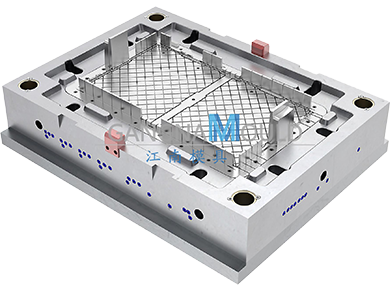
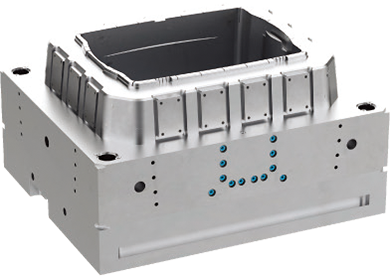
When reviewing the storage box mould range, ask for information specific to the proposed tool. A photograph can show accessible fittings, but it cannot confirm internal passages or prove that every visually similar mould has the same circuit layout. Keep catalogue information separate from the drawing released for manufacture.
Agree when the final connection drawing will be issued. Changes during manufacture or trials should appear in the delivered revision, rather than remaining as handwritten instructions held only by the toolmaker. Include the date and the person responsible for confirming the final record.
Make the circuit map readable at the machine
A useful mould cooling circuit map connects port identifiers with their intended paired connections and circuit descriptions. It should show the viewing direction clearly. A sketch viewed from the operator side can become confusing when the same tool is approached from the opposite face.
Ask how individual ports will be marked on the tool and how those marks correspond to the drawing. Labels should remain identifiable under the anticipated handling conditions. Do not assume that colour alone is sufficient: hoses may be replaced, and a colour description can be interpreted differently between workshops.
Where circuits are intended to operate independently, show that separation explicitly. Combining lines at the machine can change the arrangement approved during the trial. Record the supplier's intended connection configuration instead of treating every available port as interchangeable.
Confirm the connection interface before buying hoses
Record the connection type, size and sealing arrangement in terms understood by both parties. A nominal size without its thread system or fitting reference leaves room for a mismatched adapter. Ask whether the mould is supplied with installed fittings, loose fittings or ports prepared for the buyer's existing components.
Include the space needed to connect and remove hoses. A fitting may be reachable on an open bench yet difficult to access once the mould is mounted beside guards, tie bars or nearby services. Share the receiving machine layout if these constraints could affect the arrangement.
The cooling equipment supplier should review compatibility with the complete circuit. The required fluid, operating conditions and limitations must come from the approved technical documentation. Avoid selecting a hose or connector solely because it can be threaded into the opening.
Use a handover table with defined responsibilities
| Record item | Information to confirm | Responsible review |
|---|---|---|
| Tool identity | Mould number and final drawing revision | Buyer and toolmaker |
| Circuit identification | Port marks, paired connections and viewing direction | Toolmaker and receiving engineer |
| Mechanical interface | Fitting reference, thread and supplied components | Toolmaker and purchasing team |
| Operating requirements | Approved fluid and circuit operating conditions | Toolmaker and temperature-control supplier |
| Installation access | Hose routing and removal space on the machine | Receiving production team |
| Verification record | Agreed check method and documented outcome | Named parties in the acceptance plan |
The table is a coordination aid, not a substitute for the engineering drawing. Keep unresolved fields visible and assign an owner. A blank requirement should not silently become an assumption made by the installer.
Agree verification without inventing a test standard
Discuss how the delivered circuits will be checked and what evidence accompanies the tool. If a leak check or other verification is required, agree its method, conditions and acceptance criteria with the supplier. Do not add an arbitrary test pressure or duration to a purchase specification without technical review.
Record the tool configuration used during the check and any components excluded from it. A result for the bare mould may not cover hoses and adapters added later at the customer's site. Keep these boundaries clear when reviewing the record.
If trial conditions are supplied, retain them as a reference for that documented trial. They do not automatically establish the correct settings for every machine, polymer or production condition. The receiving team still needs to validate its own process within the approved equipment limitations.
Keep service changes traceable
Cooling connection handover continues after delivery. A replacement fitting, redirected hose or repaired passage can make the original sketch inaccurate. Establish how changes will be approved and entered into the maintenance record, especially when several tools share similar outside dimensions.
Keep spare fitting information with the tool file. A photograph of the assembled connection can help identify the component, but a written reference is more useful when purchasing a replacement. Record any sealing parts that must be changed according to the relevant instructions.
Before storage or shipment, use the toolmaker's procedure for preparing the cooling circuits. Do not assume that draining, drying or preserving one mould can be copied to every other construction. Ask for the instructions that apply to the delivered tool and retain them with its circuit drawing.
Send a complete connection confirmation request
- Identify the mould, machine interface and current drawing revision.
- Request a circuit map with a clear viewing direction and matching port marks.
- Confirm fittings, seals and the boundary of the supplied components.
- Provide access constraints around the installed tool.
- Agree verification requirements and the supporting delivery record.
- Keep the final drawing and later service changes in one tool file.
A clear record lets the receiving workshop connect the tool using the approved arrangement and identify questions before production begins. Send the proposed machine interface and existing cooling connection details with the enquiry so the supplier can review the actual installation.
Previous Post
No previous article
Next Post
Storage Box Mould Design: Balance Ribs, Walls and Surface Quality
Our Products.
Quick Links
Contact Information
- ADD: No. 268, Jinchuan Road, Xinqian Street, Huangyan District, Taizhou City, Zhejiang Province, China
- TEL: +86-(0)576-89191888
- E-MAIL: gm@gangnammould.com
Mobile
Copyright © Zhejiang Huangyan Jiangnan Mould Factory All Rights Reserved.

PP Mould
